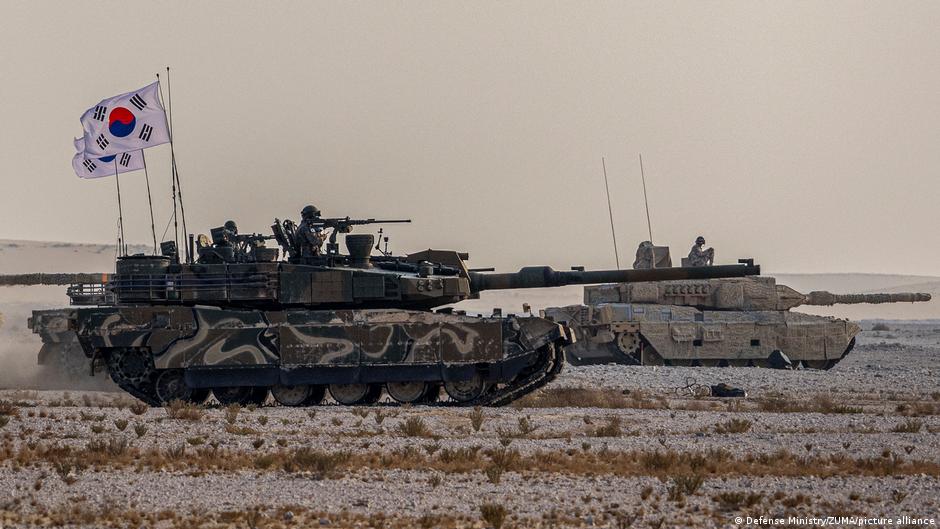

For three-quarters of a century the United States has held wartime operational control (OPCON) of South Korean forces, a legacy of the 1950–53 Korean War and the armistice that followed. Under this long-standing arrangement Seoul commands its military in peacetime, but Washington would assume operational leadership of combined forces if a major conflict erupted on the peninsula.
A planned handover of OPCON scheduled for 2015 was delayed amid worries that the South Korean military had not yet satisfied benchmarks needed to deter an increasingly capable North Korea. The issue returned to the spotlight during a recent visit by U.S. Defense Secretary Pete Hegseth, as Washington’s current administration presses allies to take on more of their own defense responsibilities.
South Korean President Lee Jae‑myung has publicly committed to completing the transfer before his term ends in 2030. For many in Seoul the transfer is not just a military change but a matter of sovereignty and national pride; successive progressive governments have promoted OPCON transfer as a step toward normalizing South Korea’s status as an independent military actor.
But analysts caution that rushing to meet a calendar target risks overlooking whether the Republic of Korea (ROK) armed forces have the operational capabilities and experience required to lead combined wartime operations. Retired Lt. Gen. Chun In‑bum and others argue that the focus should be on measurable readiness, not a symbolic deadline. Critics warn that, absent key capabilities, the handover could be perceived by Pyongyang as a reduction in deterrent strength.
U.S. and South Korean military leaders say recent talks have produced “meaningful progress,” and Hegseth praised Seoul’s posture as “great.” Still, officials acknowledge important benchmarks remain. South Korea must demonstrate it can assume command of combined U.S.–ROK forces, respond effectively to North Korea’s nuclear and missile threats, and preserve stability in the region during crises.
Observers point to concrete capability gaps. Professor Mason Richey highlights the need for stronger command-and-control architecture and enhanced intelligence, surveillance and reconnaissance (ISR) to operate at the tactical and operational levels. Beyond hardware and networks, Seoul’s forces lack recent experience leading combined wartime operations; they have not exercised that role since the Korean War.
Despite these reservations, Lee’s administration appears determined to meet its timeline. The president frames OPCON transfer as a way to alleviate U.S. defense burdens in the Indo‑Pacific and to secure greater autonomy over South Korea’s military—a hedge against unpredictable shifts in Washington’s policy. With U.S. political backing, a parliamentary majority in Seoul and public support, completing the transfer before 2030 is politically feasible.
The central question remains military readiness. Political momentum can drive a transfer, but its success will depend on closing capability gaps, conducting realistic joint exercises, and ensuring combined forces can sustain deterrence and manage escalation. Until those conditions are demonstrably met, debates will continue over whether handing full wartime command to Seoul is prudent or premature.
Edited by: Darko Janjevic