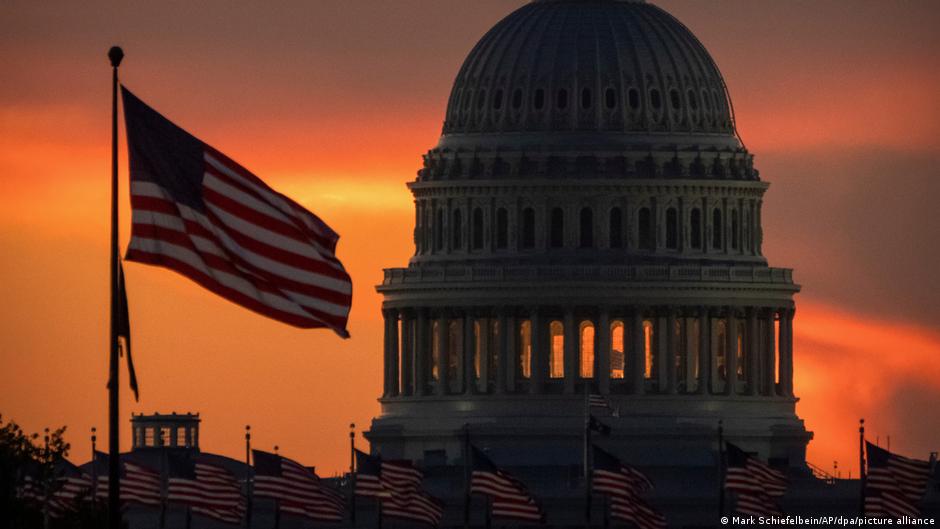

Late Monday the US Senate approved legislation to reopen the federal government, bringing an end to the longest shutdown in modern history. Senators voted 60-40 after agreeing late Sunday to move the funding measure forward and speed its consideration.
House Republicans, led by Speaker Mike Johnson, urged members to return to Washington amid travel disruptions caused by the shutdown. Johnson said lawmakers should come back “right now,” adding, “It appears our long national nightmare is finally coming to an end.” The measure now goes to the House, where a vote is expected on Wednesday, and then to President Donald Trump to be signed into law. The stopgap spending bill would fund government operations through January 30.
The shutdown began on October 1 when Democrats refused to back a Republican-authored spending plan they said would roll back health-care support affecting millions. The impasse has kept many federal employees furloughed or out of work and has disrupted air travel and food assistance programs.
How the Senate action unfolded
On Sunday night the Senate advanced a procedural motion intended to break the deadlock. That maneuver won support from a handful of Democrats; Republicans control the chamber with 53 seats, and seven Democrats plus one independent backed advancing the package. Those cross-party votes drew criticism from some within the Democratic caucus for siding with Republican leadership.
Main provisions of the bill
The legislation restores funding for the SNAP food-stamp program, which helps roughly 42 million Americans buy groceries. Thousands of federal workers who were fired or furloughed would be rehired. On health care, Republicans agreed to hold a December vote on extending Affordable Care Act tax credits that are scheduled to expire at the end of the year. Democrats have insisted that reopening the government be paired with an extension of those ACA subsidies, which help lower-income people afford private coverage.
Democratic Senator Tim Kaine said he needed assurances that any agreement would put the country on a path to fix what he called the Republicans’ “health care mess” and protect federal workers before he would support reopening the government. Senate Democratic Leader Chuck Schumer opposed the deal, arguing it offers only a future vote on ACA tax credits rather than an immediate extension.
Edited by: Wesley Rahn