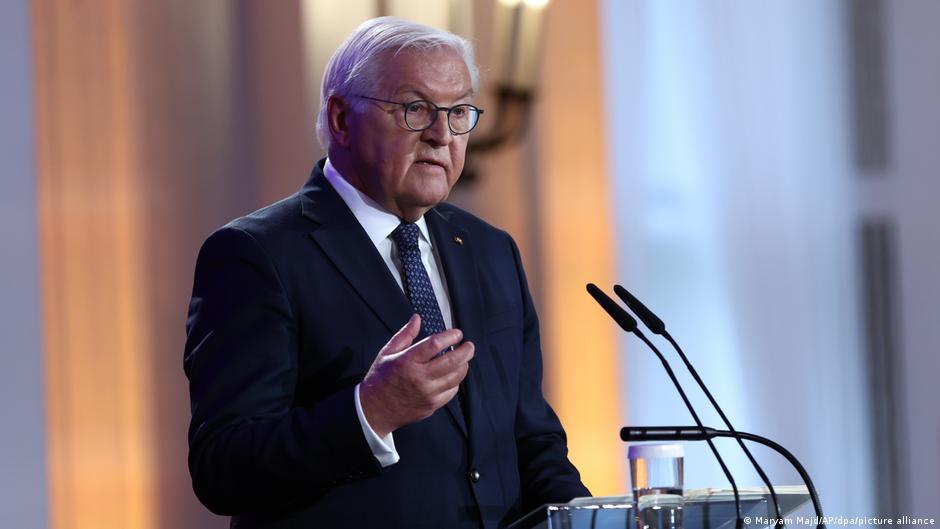

November 9, 2025, was observed across Germany as a day of layered remembrance — from the 1918 republic proclamation and the 1938 pogroms to the fall of the Berlin Wall in 1989. At a Bellevue Palace ceremony, President Frank‑Walter Steinmeier framed the date as one of “light and shadow,” using the occasion to warn that democracy and liberty are under pressure and urging citizens to defend democratic institutions actively rather than remain passive.
Steinmeier singled out the growing influence of right‑wing extremists in public life and insisted there must be no political cooperation with extremist forces in parliaments or government. He said banning a party is a last resort that demands careful consideration, and he stressed the need to confront antisemitism from all sides.
Echoing those concerns, Israel’s ambassador to Germany, Ron Prosor, warned about a form of left‑wing antisemitism that can mask itself as legitimate critique and slide into incitement, citing examples in educational and cultural settings. Recent reports and studies have recorded a rise in antisemitic incidents in Germany since the outbreak of the Israel‑Hamas war, a context that has intensified public anxiety and debate.
Security and rearmament became focal points of public discussion as well. A coalition of peace groups condemned government plans to expand military capabilities and called for protests against any return to compulsory service. Conscription has been suspended since 2011; a bill due to take effect on January 1 envisages voluntary recruitment initially, but it allows for mandatory service to be reinstated if volunteer targets are missed or if the security situation deteriorates. The peace movement has announced a day of action against potential conscription on December 5.
Domestic politics remain unsettled. Six months into Chancellor Friedrich Merz’s government, the CDU/CSU‑SPD coalition has seen falling popularity amid infighting and unfulfilled economic promises. Polls show the AfD gaining as the strongest opposition party. Internal disputes have impeded decisions such as appointments to the constitutional court, and the coalition is divided over models for military recruitment and migration policy. Merz has faced criticism for comments that were widely viewed as disparaging toward migrants.
On the political fringes, Sahra Wagenknecht’s BSW continues a debate over a possible new name ahead of its December congress, with state branches and party leadership proposing different directions while many favour retaining the familiar BSW branding.
Other national developments included a northern German court partially lifting a restriction that had prevented a man formally identified as a suspect in the disappearance of British toddler Madeleine McCann from leaving the country; the man has a documented history of serious convictions and remains under police surveillance. In Magdeburg, a trial is scheduled to begin for a suspect accused of carrying out an attack on a Christmas market. In the arts, Russian director Kirill Serebrennikov’s new film, which depicts the later life of Auschwitz physician Josef Mengele, has drawn attention.
Sporting and cultural events kept up the tempo: Berlin hosted its first regular‑season NFL game at the Olympiastadion, where the Indianapolis Colts beat the Atlanta Falcons in overtime, and Bayern Munich’s Harry Kane scored a stoppage‑time equaliser to deny Union Berlin a defeat, ending Bayern’s perfect start to the season.
As Germany marked November 9, the mix of commemoration and contemporary debate underscored calls from the presidency and others for vigilance against extremism and for active engagement in preserving democratic values.