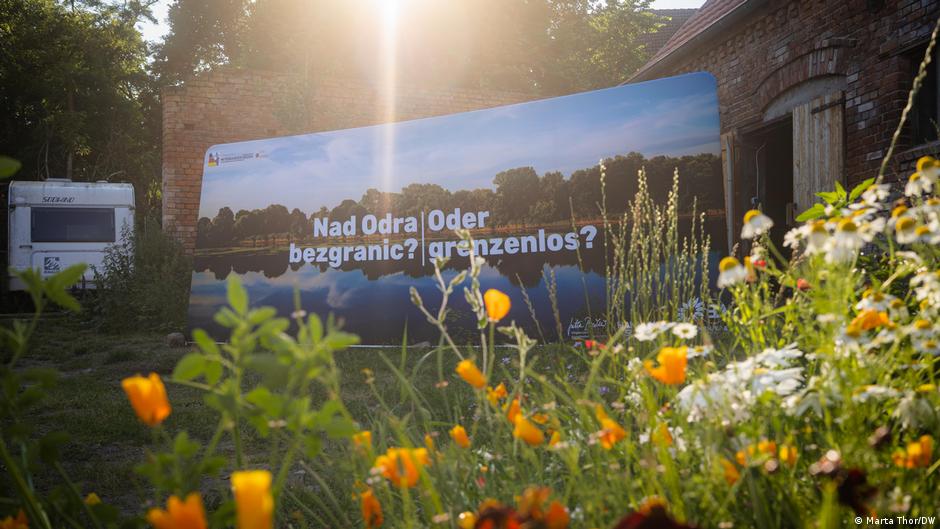

Stefanie and Norbert Bartel run a farm and B&B in eastern Germany a short walk from the Oder, facing the Polish village of Porzecze. Cyclists and birdwatchers frequent the riverbanks, and the Bartels view connecting people with the landscape as central to their work. Their home has become a gathering place for environmentalists on both sides of the border working to preserve the Oder’s habitats and biodiversity.
The river is under growing strain from canalization and a changing climate. Heavy storms increasingly cause destructive floods while prolonged heat and drought reduce flows, imperiling agriculture, shipping and wildlife. In summer 2022 the Oder suffered a severe ecological collapse when a mass fish kill, later linked to a toxic golden algae bloom, wiped out large numbers of aquatic organisms. Local residents, fishers and volunteers from Germany and Poland removed roughly 360 tonnes of dead fish and other life from the river.
Researchers traced the bloom to warm, saline discharges from mining operations, a problem made worse by low water levels and high temperatures. The catastrophe and what many saw as a slow official response prompted intensified cross-border cooperation. Norbert Bartel says the die-off brought people together who had not previously worked across the border.
The Bartels are members of Save the Oder, one of 26 local initiatives across Germany, Poland and Czechia that belong to the Time for the Oder alliance. Formed after the destructive floods of 1997, the alliance seeks to bolster cooperation between local groups. The 2022 disaster underscored that river health and responsibility do not respect national boundaries.
Activists warn that underlying drivers persist. Save the Oder’s Holger Seyfarth points to longstanding saline wastewater releases from factories and continued use of the river for sewage disposal by some farms. Poland still lacks specific prohibitions on saline and sewage discharges into rivers, and until 2022 monitoring of the Oder’s water quality was inconsistent and not routinely shared between countries.
Citizen science projects have stepped into that gap. Seyfarth and colleague Sascha Groddeck developed a monitoring approach using low-cost sensors and AI to make data on water quality more transparent. In 2024 Groddeck kayaked from Wroclaw to Berlin testing a prototype salinity logger; his measurements showed elevated salinity downstream of the KGHM copper mines at Glogow, roughly 250 kilometres upstream from the Bartels’ farm. Specialists have warned that excessive salinity remains a concern, largely tied to mining waste, and newer data suggest many of the conditions that led to the 2022 die-off have not been fully resolved despite better official monitoring.
Polish activists express frustration with what they see as limited governmental responsibility and low public outrage. Dorota Chmielowiec-Tyszko of EkoFundacja says much activism still focuses on emergency response, though her organisation has won notable flood-prevention gains in recent decades, including moving dikes, restoring natural retention areas and creating Poland’s largest dry polder.
A court victory by Polish and German groups temporarily halted canalization work on parts of the Oder after a Warsaw ruling, but construction has continued on the ground. Radoslaw Gawlik of EKO-UNIA, who pushed for judicial review, says enforcing the decision now falls to government authorities.
Cross-border cooperation faces structural limits. Theresa Wagner of Germany’s BUND notes that Polish NGOs often operate with little funding while German groups tend to have stronger organisational capacity but are slowed by bureaucracy. Many activists are volunteers who juggle regular jobs, and Stefanie Bartel emphasises that workshops and idea exchanges are valuable but implementing projects requires paid professional staff.
Despite obstacles, cooperation has generated momentum and public attention. A petition in Poland calling for legal personhood for the Oder gathered nearly 100,000 signatures, a sign of growing public concern about the river’s future, says lawmaker Anita Kucharczyk-Dziedzic.
There have also been concrete trilateral initiatives. The EURENI project (2021–2025), funded by Germany’s environment ministry with more than €370,000, connected NGOs across Germany, Poland and Czechia, promoting dialogue, training and joint planning for the Oder basin. For Chmielowiec-Tyszko, the project’s lasting contribution is the education and cross-border networks that will support activism after the funding ends.
Since the 2022 disaster, Polish environmentalists have been invited into regular roundtable discussions with political and industrial stakeholders, a new and more inclusive format in Poland. Activists see this as proof that sustained pressure on decision makers can lead to change, but it requires patience, endurance and continued cooperation.
Despite legal, financial and political hurdles, groups on both banks of the Oder are finding ways to work together and push for measures to protect the river over the long term.
Edited by: Aingeal Flanagan
This article is part of a four-part series on cross-border civil society in Europe conducted with the support of Journalismfund Europe.