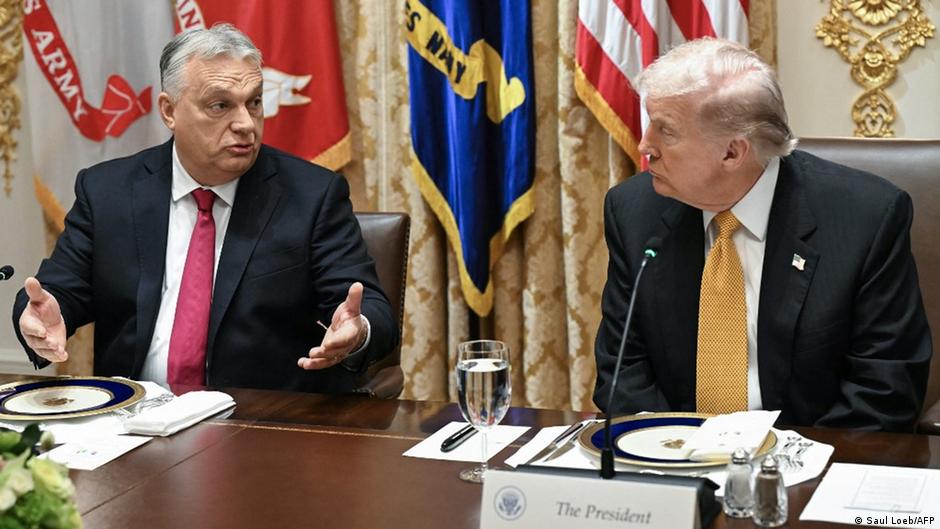

Hungarian Prime Minister Viktor Orbán told reporters after a White House meeting that the United States has granted Hungary an exemption from sanctions on imports of Russian oil and gas. Orbán said the exemption covers deliveries arriving via the Druzhba and TurkStream pipelines and described it as a full waiver sought to prevent economic harm to Hungary.
A White House official, speaking on condition of anonymity, confirmed the exemption but said it was limited to one year. Orbán had pressed President Donald Trump to make the exception, arguing Hungary’s energy situation differs from other European countries because it relies on pipeline deliveries and has no access to seaports.
Orbán told reporters he explained the potential consequences for the Hungarian people and economy if pipeline supplies were cut off. During the public portion of the meeting, Trump said he was considering a waiver for Hungary and acknowledged the difficulty the country faces in sourcing oil and gas from elsewhere. Trump also used the occasion to call for greater respect from EU leaders toward Orbán and praised his immigration policies.
The visit followed a tense backdrop: Trump had earlier announced plans to meet Russian President Vladimir Putin in Budapest, a meeting that was later postponed after Russia rejected a ceasefire. Shortly before the Trump-Orbán talks, Hungary’s Foreign Minister Péter Szijjártó disclosed plans to purchase U.S. nuclear fuel rods for two Russian-built power stations.
Orbán and Trump are long-time political allies with similar views on immigration, but they have not always aligned on energy policy. Trump has urged European allies to stop buying Russian oil to reduce funding for Moscow’s war, while Hungary has continued to depend heavily on Russian supplies since Russia’s 2022 invasion of Ukraine.
International Monetary Fund data show Hungary relied on Russia for roughly 74% of its gas and 86% of its oil in 2024. The IMF warned that a cutoff of Russian natural gas alone could reduce Hungarian output by more than 4% of GDP. Hungary has opposed the European Commission’s proposal to phase out EU imports of Russian gas and LNG by the end of 2027, a stance that has heightened tensions with Brussels over Budapest’s ties to Moscow.