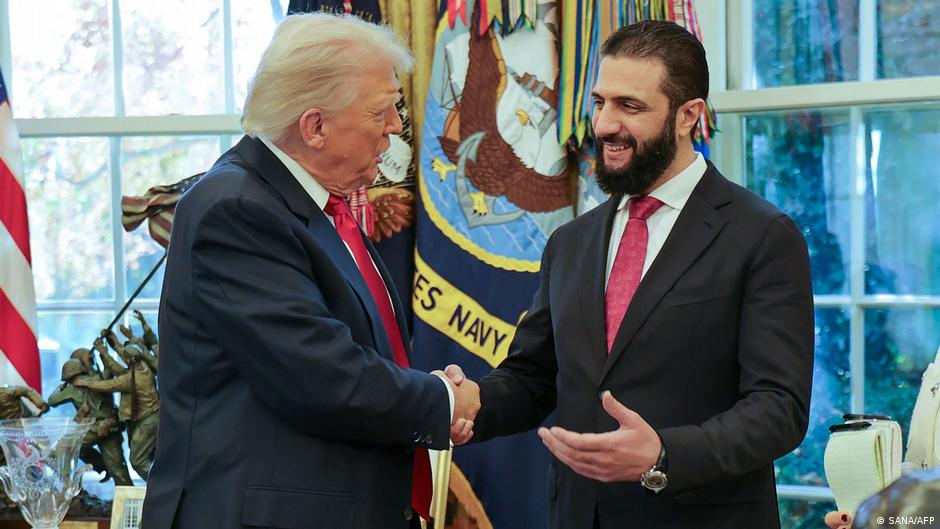

Syrian President Ahmed al-Sharaa, 42, met US President Donald Trump at the White House on Monday, marking a dramatic turn in the country’s politics since he led rebel forces to topple Bashar al-Assad less than a year ago.
Al-Sharaa, a former Islamist commander who swept into power with a rapid offensive from Syria’s northwest, became the first Syrian head of state to be received at the White House.
Sanctions were central to the private talks. Al-Sharaa sought full removal of US penalties, but following their closed-door meeting the Treasury announced a 180-day extension of its suspension of the Caesar sanctions — a temporary reprieve rather than a permanent lift. Only Congress can remove the measures entirely.
Speaking after the meeting, Trump praised the Syrian leader’s background and demeanor, saying al-Sharaa “comes from a very tough place” and calling him a “tough guy.” Trump added, “I like him,” and said the US would “do everything we can to make Syria successful” as part of broader Middle East stability.
Al-Sharaa entered the White House complex via West Executive Avenue rather than the usual West Wing driveway used by visiting foreign leaders. The two men had previously met six months ago in Riyadh at a Gulf security summit.
Diplomatic sources say Washington is mediating talks on a possible security arrangement between Syria and Israel and is also considering a small US military presence at a Damascus airbase as part of broader stabilization efforts. Trump has recently eased many US sanctions on Syria and said before the visit that “a lot of progress has been made.”
On the ground in Syria, al-Sharaa’s government is consolidating its authority amid a resurgence of sectarian violence. More than 2,500 people have reportedly died in unrest since Assad’s fall. Authorities say they have foiled two Islamic State assassination plots against al-Sharaa in recent months, prompting a nationwide crackdown on the group.
Critics and some analysts warn the transition has been marred by sectarian reprisals, alleging that pro-government Sunni gunmen have killed hundreds of people from Alawite and Druze communities. The situation remains volatile as international and domestic actors press for security and accountability.
Edited by: Dmytro Hubenko