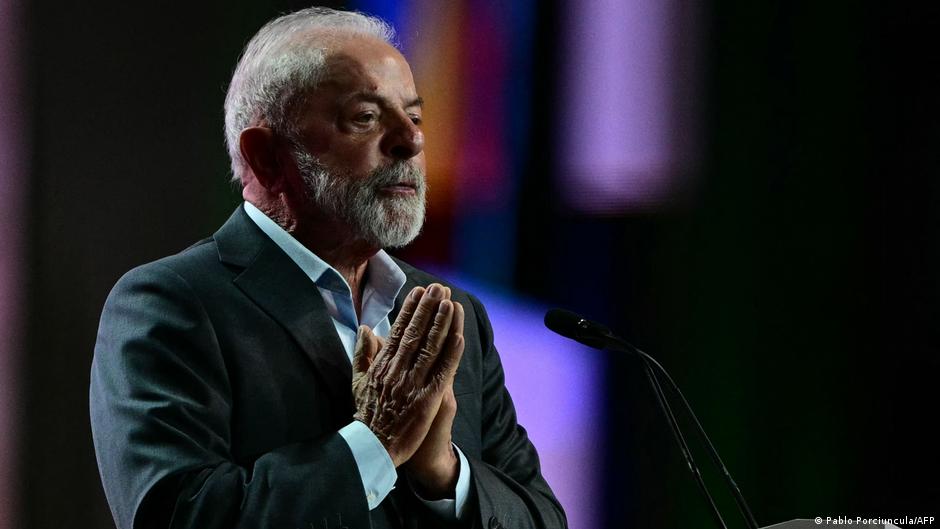

This year’s UN climate talks opened in Belém on the edge of the Amazon with a markedly different tone from last year’s summit in Baku. Brazilian President Luiz Inácio Lula da Silva used his opening speech to confront climate denial and demand immediate action, declaring that climate change is no longer a future threat but a present tragedy hitting developing countries and poorer communities hardest. He urged a “fair transition” away from fossil fuels and warned the crisis is widening the gap between “those who can live with dignity and those who should die.”
More than 190 countries have gathered for two weeks of negotiations aimed at reversing record-high emissions and limiting global warming. But with climate policy competing against pressing economic and security priorities, delegates face pressure to turn commitments into measurable progress.
UN climate chief Simon Stiell said the world has made some progress since the 2015 Paris Agreement and that national efforts have begun to bend global emissions downward. Still, he warned that the pace must increase dramatically. “I am not sugarcoating it,” he said, urging faster cuts to emissions and stronger resilience measures.
Current national climate plans, if fully implemented, would steer the world toward about 2.5°C of warming by 2100 — an improvement over pre-Paris projections but still well above the 1.5°C goal. A new UN analysis finds global greenhouse-gas emissions could fall roughly 12% by 2035 compared with 2019 levels, slightly better than earlier forecasts but far short of the roughly 60% reduction scientists say is needed by 2035 to stay on a 1.5°C path. The UN has warned that avoiding 1.5°C without a temporary overshoot is now nearly impossible, a prospect that threatens low-lying island nations.
Brazil has cast COP30 as a summit of implementation: a moment to move from pledges to concrete measures. Stiell outlined priorities that include a managed phase-down of fossil fuels, tripling renewable energy capacity, doubling energy-efficiency gains, agreeing indicators to measure adaptation, and scaling up finance. Delegates in Belém will grapple with how to increase climate finance well beyond last year’s COP29 pledge of at least $300 billion a year by 2035; many observers say the real need could be closer to $1.3 trillion annually. Lula bluntly noted such investments are “much cheaper than waging war.”
Against a backdrop of geopolitical tensions and several conflicts — and with the United States absent from the conference — Stiell appealed for cooperation: governments must not fight each other at COP30 but must fight the climate crisis together. COP30 president André Corrêa do Lago urged negotiators to embrace mutirão, a Portuguese word of Indigenous origin meaning collective effort. Both he and Lula emphasized defending science and multilateralism amid a surge of misinformation ahead of the summit.
Stiell warned of the heavy economic and human toll of inaction, pointing to recent extreme events that dealt big blows to GDP and communities. He stressed that solutions already exist and are increasingly cost-effective: wind and solar are now the cheapest power sources across roughly 90% of the globe, global investment in renewables has outpaced fossil-fuel investment and renewables this year surpassed coal as the largest electricity source. As talks begin, key battles will center on the speed of fossil-fuel phase-downs, scaling finance for mitigation and adaptation, and protections for the most vulnerable — with the Amazon setting a symbolic backdrop for debates over ecosystems and a just global transition.
Edited by: Jennifer Collins