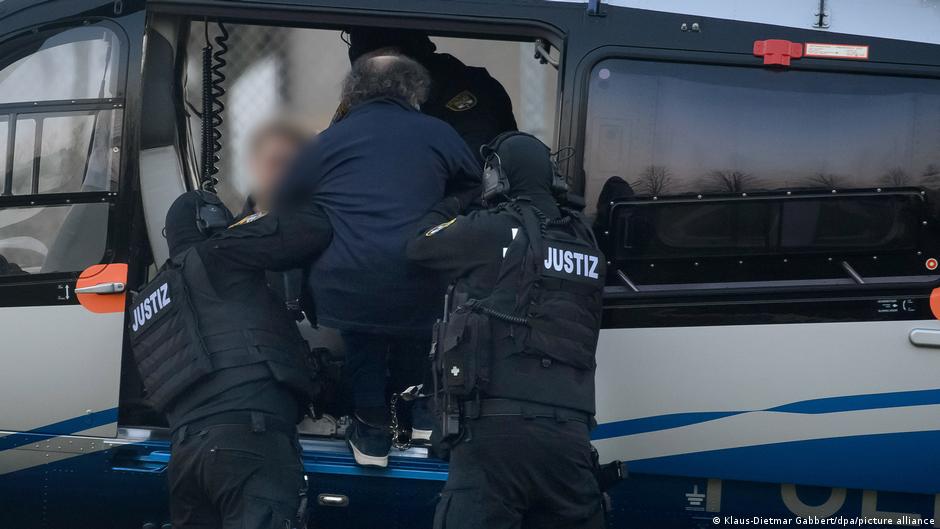

The man charged with plowing a car into a crowd at a Magdeburg Christmas market last December told the court he was the driver. The statement came on the first day of the high-security trial, where he faces six counts of murder and 338 counts of attempted murder.
Shortly before the morning session broke for lunch, 51-year-old Taleb A. — originally from Saudi Arabia and resident in Germany since 2006 — asked to address the court. He told judges he wished to speak at length, saying he could speak for “hours, maybe days.” Earlier this year he surprised some victims by sending apology letters from prison. Judge Dirk Sternberg said Taleb A. would be given time to speak after the hearing resumed.
During the proceedings, the defendant confirmed in open court that he had driven the vehicle into the market crowd. The attack killed six people — five women and one child — and injured 338 others. The scale of the case has prompted the construction of a temporary court building to hold the many witnesses, plaintiffs and media; the structure will be taken down after the trial. For security, the defendant will sit in a glass enclosure during sessions.
Prosecutors portray Taleb A. as a man who expressed strong criticism of Islam and Germany’s immigration policies, embraced various conspiracy theories and vented online anger that, they say, combined with personal dissatisfaction to motivate the attack. Authorities allege his intent was to “kill as many people as possible.” He denies nothing about driving, and faces the possibility of life imprisonment if convicted.
Taleb A. lived and worked in Germany for years as a doctor in Bernburg and was detained soon after the incident. About 180 victims and relatives have joined the case as co-plaintiffs. The Magdeburg Regional Court has scheduled roughly 50 trial days, with the session calendar running through March 12, 2026.
The attack prompted many German Christmas markets to increase security, adding measures such as vehicle barriers to protect visitors. This trial is one of the largest in Germany’s post-war history, reflecting the number of victims and the public interest in the case.