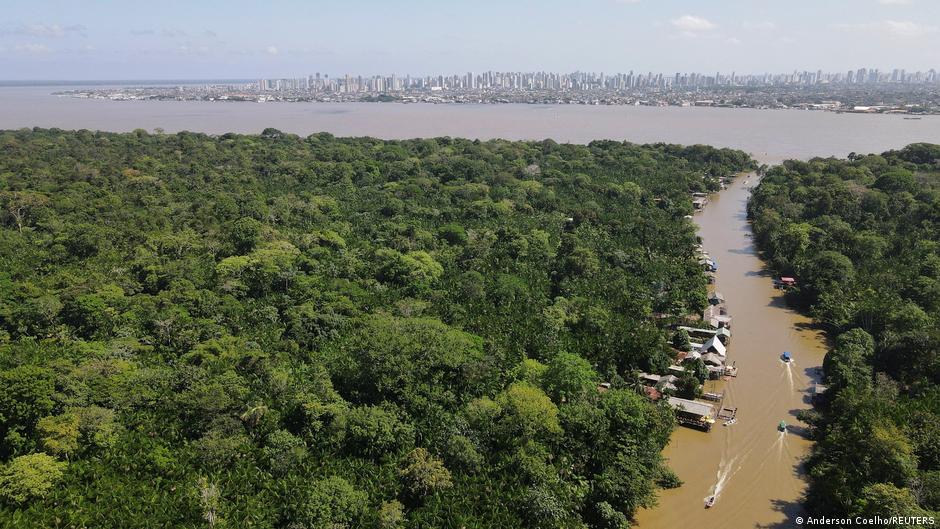

Brazil is no stranger to staging global events — from the World Cup and Olympics to huge concerts on Copacabana. Now the country will host the UN climate summit, COP30, in the Amazonian city of Belém, where thousands of delegates will spend two weeks negotiating responses to an accelerating climate crisis.
The setting is deliberate. Belém sits at the gateway to the Amazon, a rainforest that stores billions of tons of carbon and helps regulate the global climate. Scientists warn the forest may be approaching a tipping point, as rising temperatures and continued deforestation increase the risk of large-scale dieback. Locally, climate impacts are already evident: longer fire seasons, more frequent droughts and increasingly intense blazes.
Belém’s choice as host has drawn mixed reactions. Practical concerns have surfaced about hotel shortages and price spikes that could limit participation. Symbolically, the city lets Brazil showcase efforts to curb deforestation — historically its largest emissions source. Since Luiz Inácio Lula da Silva returned to the presidency in 2022, deforestation has fallen from the highs under Jair Bolsonaro, with the government pledging to end deforestation by 2030 and reporting roughly a 30% drop in rates last year. Still, progress is fragile: Brazil suffered around 200,000 wildfires last year, burning an area larger than Belgium and releasing greenhouse gases on the order of an industrialized country’s annual emissions.
That fragility is tied to policy contradictions. Brazil accounts for roughly 2.5% of global greenhouse gas emissions and has committed to cutting emissions 59–67% by 2035 compared with 2005 levels. It is already a renewables leader, with nearly 90% of electricity coming from hydropower, wind and solar. At the same time, Brasília is pursuing expanded fossil-fuel production and aims to be a leading oil producer; recent approvals for drilling at the mouth of the Amazon drew strong criticism from environmentalists.
Brazil’s COP presidency and its domestic agenda reflect these tensions. While Brazilian leaders joined international language at COP28 committing to move away from fossil fuels, officials argue wealthy nations should shoulder earlier and deeper decarbonization given historical emissions. Some Brazilian leaders say hydrocarbon export revenues can finance a just transition. Critics counter that expanding oil output while hosting the world’s top climate talks undercuts credibility — a critique familiar from other mineral- and oil-producing hosts.
Domestic politics complicate matters further. A controversial draft law promoted by powerful agribusiness interests sought to loosen environmental licensing for large infrastructure projects; although the president vetoed many measures, a fast-track clause remains. Campaigners warn such provisions could accelerate deforestation and dispossession of traditional and Indigenous communities. Ahead of COP30, Indigenous groups and environmental activists have protested new oil projects and demanded stronger protections for forests and peoples.
What can COP30 realistically achieve under Brazil’s presidency? The summit arrives nearly a decade after the Paris Agreement and at a time when global temperatures are already roughly 1.4°C above pre-industrial levels. Delegates face pressure to raise ambition, deepen emissions cuts and accelerate fossil-fuel phase-downs — building on momentum from COP28.
There are reasons for guarded optimism. Brazil will launch the Tropical Forests Forever Facility (TFFF) during the conference, a fund that rewards countries for forest protection; President Lula has pledged $1 billion to it. Observers point out that meaningful progress on fossil-fuel transitions can occur even when major producers host negotiations, if political will and compromise align.
Ultimately, the summit’s success will hinge on reconciling competing priorities: protecting the Amazon and Indigenous rights, sustaining rural and urban development, and aligning short-term economic plans with long-term climate commitments. As Environment Minister Marina Silva has said, overcoming these contradictions will be essential not just for Brazil but for many nations facing similar trade-offs.