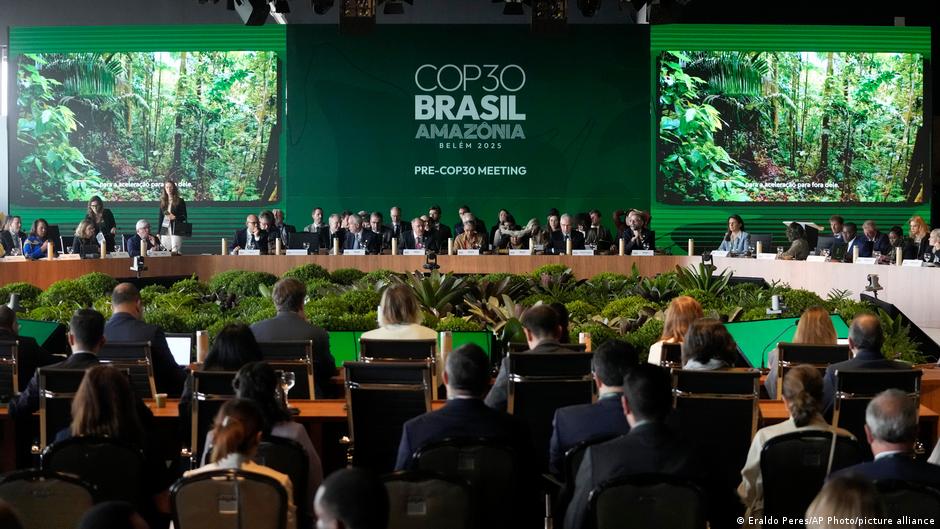

Two cruise ships have been anchored at an expanded port outside Belém, northern Brazil, turned into floating hotels to accommodate parts of the 40,000–50,000 people expected at COP30. With hotels scarce and costly, the city has even repurposed strip clubs and steamboats as lodging. Heads of state and government from nearly 200 countries will arrive to try to push global climate action forward.
Belém’s role as host is deeply symbolic. The city sits on the edge of the Amazon, a biome essential to planetary climate stability that is increasingly scarred by fires, drought and shifting rainy seasons. Deforestation continues at worrying rates, while many local communities face some of Brazil’s deepest poverty. As fossil-fuel driven warming fuels more frequent and severe extreme weather, those with the fewest resources often suffer the worst impacts — a pattern repeated around the world.
President Lula has called COP30 a “conference of truth” and framed it as a “conference of implementation,” underscoring the urgency for concrete action. That urgency is well-founded: no country is currently on track to meet the Paris Agreement’s 1.5°C limit. Given that adaptation is already essential for societies and ecosystems facing escalating harm, policymakers in Belém are expected to put adaptation high on the agenda, moving from commitments to measurable measures that reduce risk.
Developing and vulnerable nations are pressing wealthy emitters for far more financing, arguing that those with higher historical emissions should shoulder greater responsibility for adaptation and loss and damage. Unlike mitigation, adaptation lacks universal targets; many vulnerable countries want clear indicators so the world can assess whether investments actually increase resilience.
Another test at COP30 will be updated national climate pledges. Parties were supposed to submit new targets by September, but by November fewer than 70 countries had done so, a shortfall the COP presidency called disappointing. Missed deadlines and unmet promises have deepened frustration and raised questions about political will.
For Brazil, hosting COP30 is an opening to show that economic development and environmental protection can go together, and to reclaim leadership on a fracturing global stage. Multilateral cooperation has been strained by geopolitical tensions — from trade disputes to the wars in Ukraine and Gaza — and by past policy reversals like the US withdrawal from the Paris Agreement under Donald Trump. Those ruptures complicate efforts to build global momentum.
Credibility matters. Analysts say a host that inspires trust can help bridge divides. Brazil plans to launch the Tropical Forest Forever Facility, a fund seeded with public money and leveraged by private capital to reward countries that protect tropical forests. The initiative aims to mobilize roughly US$125 billion, with at least 20% of payments reserved for Indigenous communities. How much will be pledged or actually delivered in Belém remains uncertain.
The shifting dynamics among major economies add another layer. Germany, once a driver within the EU, is projected to miss its 2045 climate-neutrality target and has signaled moves to expand gas infrastructure, worrying observers about diluted ambition. China is taking on a more visible role among big emitters, but experts caution Beijing may not push others toward higher ambition when that runs against its own interests.
Campaigners and negotiators from developing countries are clear about what they want: not slogans but specific, financed commitments — technology transfers, measurable adaptation indicators, and predictable funding for loss and damage. As Mohamed Adow of Power Shift Africa puts it, Belém should deliver “concrete ambitions, concrete technology transfer, not the usual platitudes.”
COP30 will test whether rhetoric about truth and implementation can translate into real money, clear targets, and accountability mechanisms that protect forests, communities and the climate. Originally published in German.