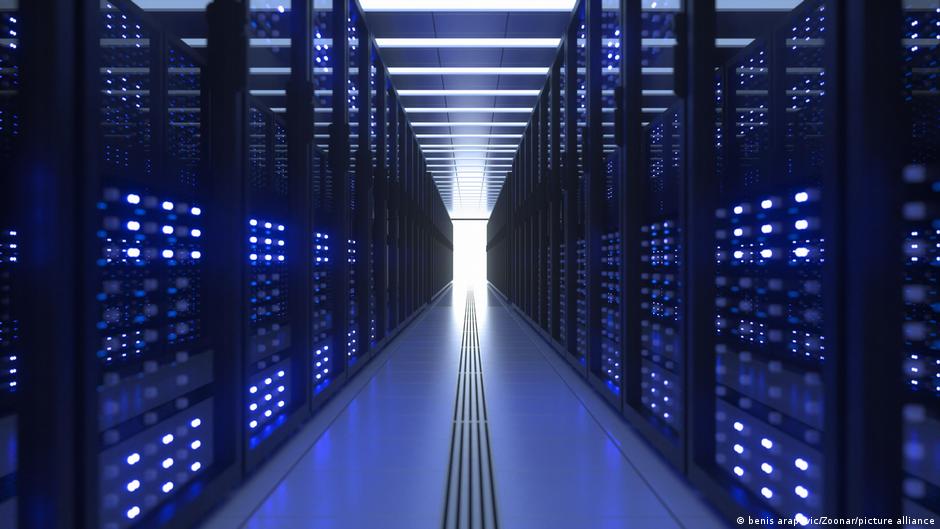

The rush to build and deploy artificial intelligence shows no sign of slowing: tens of billions of dollars are pouring into chips, cloud infrastructure, startups and talent. High-profile commitments this year include a combined $500 billion push for AI supercomputers from groups linked to OpenAI, SoftBank and Oracle, a proposed $100 billion OpenAI–Nvidia fund for advanced chips, and stepped-up spending from China’s Alibaba and Tencent as Beijing aims for AI leadership by 2030. Since ChatGPT arrived in November 2022, AI-related equities have added roughly $17.5 trillion in market value, accounting for about three quarters of the S&P 500’s gains and driving companies such as Nvidia and Microsoft to record valuations.
But beneath the headlines, cracks are appearing. Corporate adoption of AI tools is cooling, spending is being scrutinized, and the gap between promise and measurable profit remains wide. Economists and industry watchers say that if usage does not accelerate and translate into clear returns, investor enthusiasm could falter.
Data from the US Census Bureau’s biweekly survey of some 1.2 million firms shows AI-tool usage among companies with more than 250 employees dipped from nearly 14% in June to under 12% in August. Practical limitations are part of the reason: large models still produce hallucinations — plausible but false outputs — and their reliability can be inconsistent. Autonomous systems often complete tasks successfully only a fraction of the time, and most pretrained models do not learn and improve in the field the way a human worker would. Oxford’s Carl-Benedikt Frey has warned that the massive infrastructure bets hinge on rising usage, and without new, durable use cases the current momentum could stall.
Investors are already tempering expectations. In Q3 venture capital deals for private AI companies fell 22% quarter-on-quarter to about 1,295 deals, though quarterly funding stayed above $45 billion for the fourth straight quarter, per CB Insights. Critics point to a disconnect between enormous capital deployment and the revenue AI products currently deliver. Market-leading OpenAI reported roughly $3.7 billion in revenue last year against $8–9 billion in operating expenses, and while the company projects higher revenue this year, some estimates suggest large cumulative cash burn ahead.
Economists argue several AI services are underpriced relative to their costs and that rising training and inference expenses make further gains harder to justify without business models that show durable margins. One analyst has even estimated the scale of misallocated capital tied to AI investment at levels many times larger than historical bubbles, underscoring concerns about overheated expectations.
The public markets reflect mixed signals. Some firms reporting strong AI-linked growth have still seen their shares fall on worries about sustainability. Palantir, for example, posted a 63% year-over-year revenue increase in Q3 but its stock dropped after the report. Nvidia remains the standout beneficiary of the boom: in Q2 its data-center business accounted for 88% of revenue as total sales hit a record $46.7 billion, and it guided the next quarter even higher. Observers often compare Nvidia to sellers of shovels during a gold rush — well-positioned even if many AI ventures stumble.
Views on the path ahead differ. Some researchers and investors warn that a sharp correction or even a broader collapse is possible if technical and economic fundamentals do not improve. Others expect a more modest market correction: hype will wane, capital will be reallocated toward projects that can demonstrate concrete, measurable returns, and enterprises will begin to track AI ROI more rigorously.
If the latter proves true, the next phase of AI investment will be less about headline-sized commitments and more about proving impact — automating clear, repeatable tasks, improving forecasts, and embedding models that adapt and learn in production. The industry’s ability to deliver verifiable value, not just dazzling demonstrations, will determine whether this era becomes a sustained transformation or a costly detour.