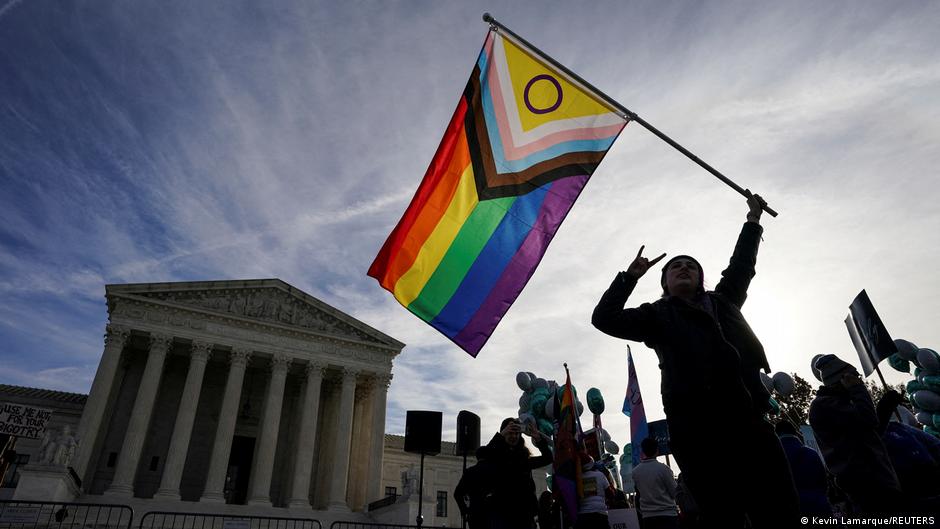

The U.S. Supreme Court on Monday declined to revisit its 2015 precedent that established a constitutional right to same-sex marriage. In an unsigned order, the court refused a request from former Kentucky county clerk Kim Davis to overturn the high court’s Obergefell v. Hodges decision, which requires states to permit and recognize marriages between same-sex couples.
Davis had asked the justices to reverse a lower court’s judgment ordering her to pay roughly $360,000 in damages and attorneys’ fees to a couple whose marriage license she refused to issue on religious grounds. The Supreme Court provided no explanation for its refusal.
The decision leaves intact the landmark 2015 ruling that held state bans on same-sex marriage violate the Constitution’s guarantees of equal protection and due process. The case’s preservation offers a measure of reassurance to same-sex couples after a recent period of uncertainty about the durability of constitutional precedents: the court’s 2022 decision to overturn Roe v. Wade prompted concerns that other major precedents could be reconsidered. Justice Clarence Thomas has previously suggested that the court should revisit Obergefell.
William Powell, the lawyer for the plaintiffs in the damages action, described the court’s action as a victory for married same-sex couples who have built families and lives around that right. Mat Staver, founder of the conservative Christian legal group Liberty Counsel, which represented Davis, called the outcome “heartbreaking” and said his organization would continue efforts to overturn Obergefell.
By declining to take the case, the Supreme Court left the lower-court ruling intact and reaffirmed, for now, the protection that allows same-sex couples to marry nationwide.
Edited by Dmytro Hubenko