
“I can vividly remember the last day,” said Emerico Maria Laccetti, a former colonel with the Italian Red Cross. During the 1999 Kosovo War he was stationed in Albania, a few hundred metres from the border, commanding a field hospital in Morina for refugees from the province then part of Serbia.
“We stood on containers and watched the bombings,” he recalled. “It was like a perverse New Year’s Eve fireworks display. Even at a distance, you could feel the air pressure, the shock waves going through your body. But no, we were not told about the specific dangers of the weapons being used.”
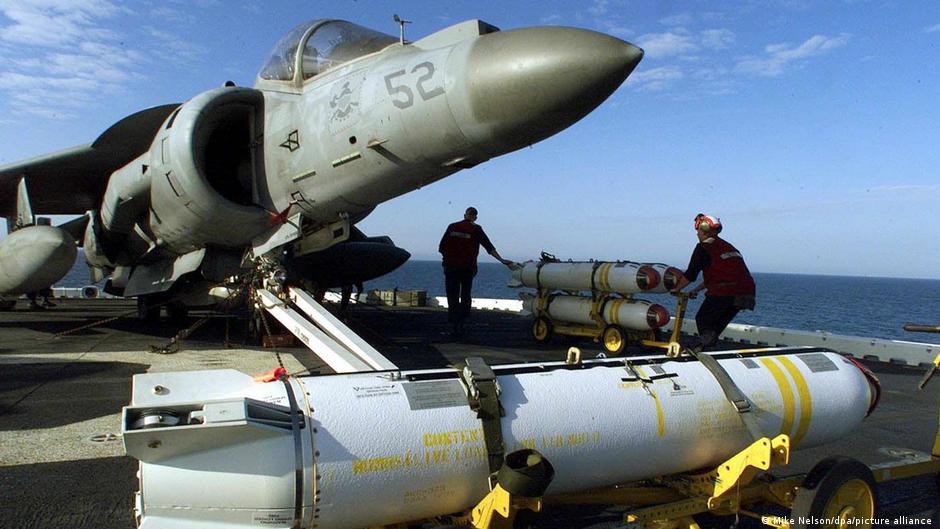
In March 1999 NATO launched Operation Allied Force. Over 78 days the alliance flew missions with up to 1,000 aircraft and dropped, by official counts, more than 28,000 explosive devices. Among the munitions used were rounds containing depleted uranium (DU), a dense material—roughly three times heavier than lead—valued for its ability to penetrate armour. When DU munitions strike hard targets they can vaporise or fragment, creating fine particles that, if inhaled or ingested, are both chemically toxic and weakly radioactive.
NATO has repeatedly rejected a causal link between DU exposure and cancer. In written statements it has said it takes health and environmental concerns seriously and pointed to a 2001 committee finding that DU use in Kosovo “did not cause any lasting health risk to the population,” as well as later UN reports from 2014 cited as reliable scientific evidence.
That official position contrasts with rulings from Italian courts. Around 500 Italian servicemen who later developed cancer sued the state. Laccetti, who returned to Italy in July 1999, developed breathing difficulties and was found to have a malignant lung tumour measuring 24 x 12 x 14 cm. After initial successful treatment the cancer recurred in 2008; tissue analysis showed what doctors described as an “extraordinary amount” of perfectly round ceramic particles embedded in his tissue “—as if I had been standing in a blast furnace.” Experts concluded those particles had accumulated over years and might migrate or cause inflammation that could contribute to harm. In 2009 a Rome court recognised Laccetti as a victim and ordered compensation.
Following the conflict, Italy’s Defence Ministry convened a commission that reported a statistically significant increase in non-Hodgkin lymphoma among affected soldiers. Other investigations, including a 2001 World Health Organization review, did not find conclusive evidence linking DU exposure to individual disease cases. The scientific picture remains mixed: DU can only cause damage if particles enter the body, typically as fine dust, but in most deployments the amount absorbed by specific individuals was not measured, and cancer has many potential causes—lifestyle, environment and genetics—making single-cause attribution difficult.
Wim Zwijnenburg of the International Coalition to Ban Uranium Weapons (ICBUW), who has researched DU for over 16 years, says the Italian court decisions show a breach of duty of care and highlights wider accountability questions. He stresses the scarcity of long-term, reliable exposure studies and the difficulty of proving causation in individual cases, while also arguing that soldiers and civilians were not adequately protected or informed about long-term risks.
Questions also persist about responsibilities after the conflict. A 2002 UN resolution required states to inform affected countries when DU had been used and to assist with cleanup. It is unclear how thoroughly NATO met those obligations in Kosovo. KFOR, the NATO-led peacekeeping force deployed after the war, provides little public information about decontamination work. Site visits and local reporting indicate many Kosovars remain unaware of potential contamination and that systematic cleanup has largely not taken place, with one notable exception west of Gjakova in the village of Lugbunari.
DU is officially categorised as low- to intermediate-level radioactive waste. In humid environments, corroding fragments can leave residues and contaminated dust. Uranium’s very long half-life means residues remain potentially hazardous for a long time. Critics point to what they consider double standards: fragments found in a European park would be cordoned off and handled under strict protocols, while in some post-conflict settings risks have been downplayed.
Laccetti says the compensation awarded to veterans has not produced broader policy changes. “Depleted uranium ammunition is still legal. We have tried in every conceivable way to ban it, like cluster munitions or anti-personnel mines,” he said. “We have failed.” Those advocating for a ban argue that, beyond legal and ethical questions over use, there remains a duty to assess and, where necessary, remediate contaminated sites and to inform affected communities.
The reporting for this piece included contributions from Gabriele Cruciata in Rome and Marjolein Koster in Utrecht. The research was supported by Journalismfund Europe. This article was originally published in German.