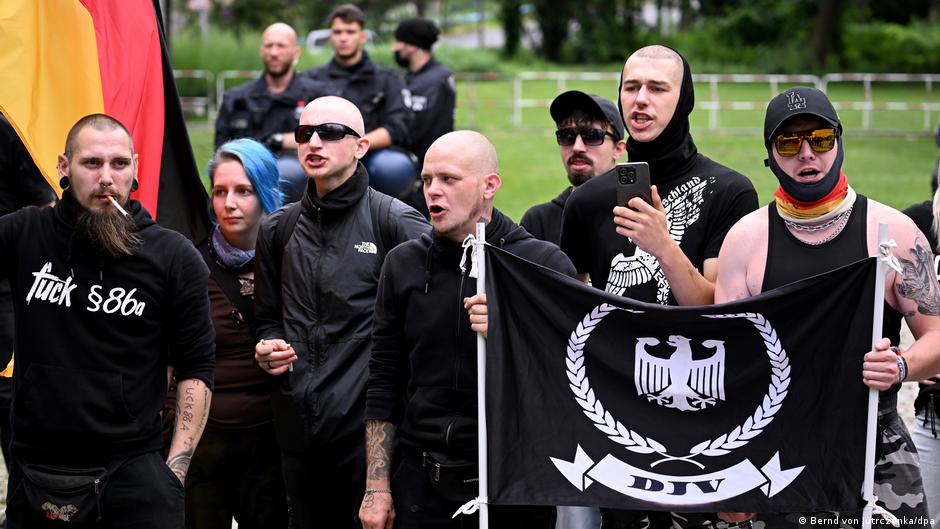

The latest Mitte-Studie from the Friedrich Ebert Foundation, a recurring survey launched in 2006, polled 2,000 people representing a cross-section of voters, education levels, incomes and origins to measure attitudes toward right‑wing extremism, xenophobia and antisemitism. The results, published this week, show robust support for democratic values alongside worrying fault lines.
Support for democracy is high: nearly 80% of respondents say they are firmly committed to democratic principles, up six percentage points from the survey four years ago. Open endorsement of right‑wing extremism has fallen sharply — only about 3% of those surveyed now hold an explicitly right‑wing extremist worldview, a marked decline from earlier years. Researchers attribute part of that decline to stabilization of the political center, which appears to have slowed extremist gains.
At the same time, many Germans regard right‑wing extremism as a serious danger. Roughly 70% view its resurgence as threatening, and more than half said they would be willing to take action against it. Yet a sizable minority remains ambivalent: around 20% neither agree with nor explicitly reject right‑wing extremist statements. Only 6.6% of respondents rejected all 18 extremism‑related items measured by the study — the smallest share recorded to date.
Geographic and demographic patterns vary. Contrary to common stereotypes, a slightly higher share of people in western Germany displayed a ‘‘closed’’ right‑wing extremist outlook, defined in the study as a coherent anti‑democratic, misanthropic worldview. By contrast, xenophobic attitudes are more widespread in the east.
On core democratic values, 88% said dignity and equal treatment for all should be a top priority. Still, a quarter of respondents feel minorities receive too much consideration, and about 11% denied that minorities deserve fundamental rights. Negative sentiments were more common toward particular groups: roughly 30% held unfavorable views of asylum seekers and about 36% expressed negative attitudes toward the long‑term unemployed.
Younger cohorts emerged as a particular concern. The study’s authors report that young people are more likely than older generations to adopt authoritarian ideas linked to Nazi‑era and other extremist ideologies — including support for dictatorship, antisemitic positions or an aggressive national identity. Researcher Nico Mokros noted a ‘‘pronounced youthful tilt’’ toward authoritarian attitudes combined with frustration over perceived lack of control, which can redirect anger toward marginalized groups.
Signs of rising nationalism and chauvinism also appear: 23% agreed that Germany’s principal political aim should be to secure the power and prestige the country deserves, and about 15% expressed support for a leader who rules with a firm hand.
Those trends sit alongside an erosion of trust in institutions. Andreas Zick of Bielefeld University warned that if people see extremism as a threat but believe authorities are not doing enough, mistrust grows — opening opportunities for populists and extremists who claim to offer straightforward solutions.
Public perceptions of the problem are split. While 70% see right‑wing extremism as a threat, 22% say media coverage overstates its prevalence. The study therefore presents a mixed picture: durable, broad-based democratic commitment on the one hand, and persistent vulnerabilities on the other — especially among youth and in attitudes toward minorities — that could be exploited if institutional trust continues to decline.
The report underscores the need for targeted civic education, stronger institutional engagement with younger people, and continued vigilance against xenophobia and antisemitism, even as Germany’s democratic center remains comparatively resilient.