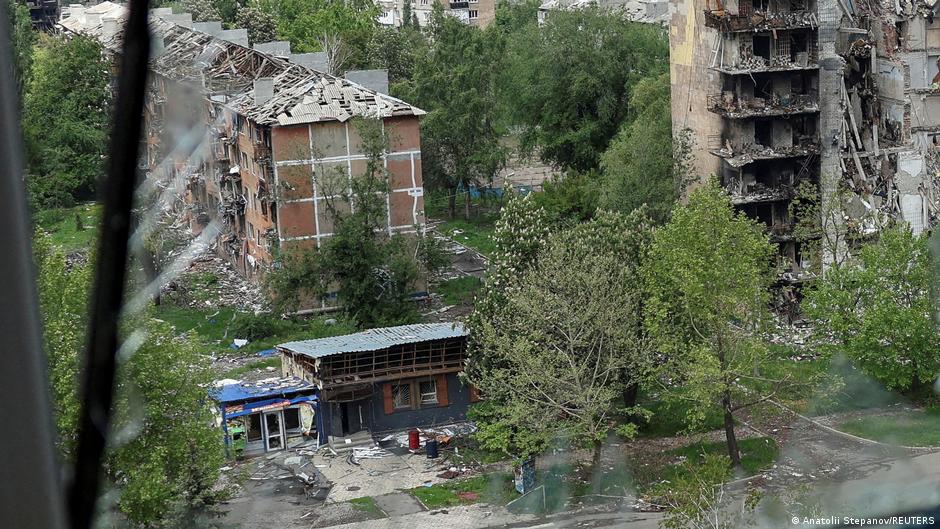

Heavy fighting around Pokrovsk has become the focus of recent military updates, with control of the town now seen as pivotal for Ukrainian defenses in Donetsk. Some 21 months after Russia’s assault on Avdiivka, Russian units appear to be aiming to turn Pokrovsk into a new logistical hub — a development that would have major implications for the wider campaign. Before the 2022 invasion Pokrovsk had roughly 60,000 residents and was an industrial and transport center for the Ukrainian-held Donbas; by mid-2025 the population had dropped to about 1,500.
Clashes along the city’s border with Dnipropetrovsk have persisted for more than a year and have increasingly moved into built-up areas. Analysts describe the situation as a murky “gray area” where front lines and control are hard to verify. Rob Lee, a senior fellow at the American Foreign Policy Research Institute, told Reuters that Russian sabotage teams are probing deep into the city’s northwest and northern sectors and that Moscow has recently reinforced its forces there — possibly adding a few hundred troops — which could increase Russian presence and influence on the ground.
Marina Miron, an honorary researcher at King’s College London, says the most acute problem for Ukrainian defenders is being cut off from reliable logistics. Regular supply lines and casualty-evacuation routes have become too risky, forcing Ukraine to rely on aerial and ground drones to move ammunition, supplies and wounded personnel. Miron warns that without secure resupply and medical evacuation, frontline units face a mounting and dangerous strain.
Has Pokrovsk already fallen? Markus Reisner, an Austrian Armed Forces colonel and military historian who has tracked the war since its start, argues that Ukrainian forces have not simply abandoned the town but are attempting to buy time while preparing a new defensive line beyond Pokrovsk and nearby Kostyantynivka. Reisner nevertheless allows the possibility that parts of the town may already be under Russian control.
A full Russian capture would be significant. Lee notes Moscow has struggled to secure large urban gains recently, so taking Pokrovsk would be both a military and propaganda success for Russia in 2025. Reisner adds that while Russia did not achieve the decisive summer breakthrough it sought, Kremlin forces have still managed substantial territorial advances.
If Ukrainian troops are compelled to withdraw, analysts warn Pokrovsk could serve as a central Russian base for operations in the region, using high-rise and densely built neighborhoods to house thousands of soldiers. Ukrainian drone teams, electronic-warfare specialists and reconnaissance units would likely be pushed back into surrounding woodland. Ukrainian observer Oleksandr Kovalenko told Reuters that capturing Pokrovsk would mark Russia’s first operational-tactical success since Avdiivka, contrasting with a string of largely tactical gains to date.
Commentators outline two main paths Moscow might take: present the town’s capture as a domestic victory to strengthen Putin’s negotiating position with Kyiv and the West, or capitalize on momentum to press further offensives toward other Donetsk cities such as Kramatorsk and Sloviansk and threaten neighboring Dnipropetrovsk.
Reisner says Kyiv is trying to shape the strategic picture by striking targets deep inside Russia and is seeking U.S. long-range weapons, including Tomahawk missiles, to extend its reach. Despite heavy losses, Reisner observes, Putin appears to believe he is on course for victory.
This article was originally written in Ukrainian.