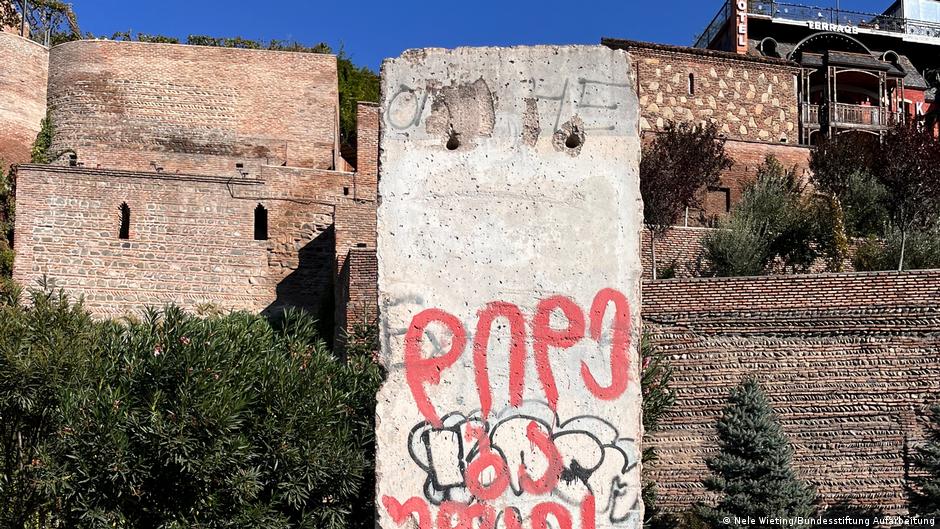

For 28 years the Berlin Wall stood as Germany’s dividing line: built in 1961 by East German authorities after roughly 3 million people had fled to the West, it sealed off West Berlin from the German Democratic Republic with a system of barriers, watchtowers and patrols along about 155 kilometers of border. Although designed to be impenetrable, an estimated 5,000 East Germans crossed it over time. The GDR’s border regime was deadly: between 1961 and 1989 at least 140 people died at the wall, including escapees, border guards and bystanders.
The wall cut nearly all ties between East and West Berlin, save for a few crossings such as Checkpoint Charlie. When communist rule across Eastern Europe collapsed, the wall fell on November 9, 1989; reunification followed about a year later. Only fragments remain in Berlin today — the longest preserved stretch is the East Side Gallery, a 1.3-kilometer painted concrete memorial, and other preserved pieces stand at sites like the Berlin Wall Memorial.
Almost immediately after the fall, Berliners began ripping the structure apart. Governments, institutions and private collectors around the world sought sections as souvenirs, memorials or diplomatic gifts. The Federal Foundation for the Study of the Communist Dictatorship in Eastern Germany has tracked these dispersals and counts fragments in 57 countries outside Germany. The United States alone has more pieces than Berlin itself, with segments displayed from the United Nations headquarters in New York to the CIA campus in Langley — and in more unexpected locations, such as a Las Vegas bathroom.
Wall fragments now sit on every inhabited continent, from New Zealand to Iceland and from Indonesia to Chile. Their provenance varies: some were sold by German agencies or private vendors, others were official gifts from the Berlin Senate or federal institutions. Recipients and curators interpret the pieces differently, attaching local meanings to the relics.
Where national division is a present concern, the wall often serves as a call for unity. In South Korea, for example, six Berlin Wall segments are installed in locations that evoke the Korean division. At Dorasan Station, near the North Korean border, a segment unveiled in 2015 accompanies the “Unification Platform”; German President Joachim Gauck joined South Korean officials there and the plaque urges the creation of a reunited Korea, quoting Gauck: “To find and create a life of freedom together.”
In many former Eastern Bloc countries the fragments commemorate the end of communist rule. Sofia requested a piece from Berlin in 2006; it now stands beside a memorial to victims of communism with bilingual plaques explaining the wall’s dates and calling the segment a gift from Berlin as proof of a reunited Europe and Bulgarian freedom. While some displays preserve the wall’s original grey concrete look, others are painted or graffitied, often featuring motifs of peace, solidarity or reconciliation.
Some of the painted panels reflect the work of early West Berlin street artists. Thierry Noir, who painted on the western side before 1989, later decorated sections that were sold or gifted abroad; a Noir-painted segment is reportedly on private display in the U.S. in the yard of model Heidi Klum, a gift from her husband.
The market for wall pieces was not without controversy. A state enterprise in the transitional GDR handled sales, sometimes working with West Berlin agencies that painted panels to increase their appeal and value. Critics argued that those profiting from sales were linked to the regime responsible for the wall’s deaths, even where proceeds benefited charities. Artists and commentators have interrogated this commercialization: Norwegian artist Lars O. Ramberg’s Trondheim sculpture Kapitalistischer Realismus mounts a wall fragment stamped with the word “SALE,” both criticizing and acknowledging the commercial market for the relics.
Interest in owning segments has declined in recent years. “World history has gone on, and global politics are different,” Anna Kaminsky, director of the Federal Foundation, has said — the wall’s symbolic charge has diminished as living memory fades. Still, whether painted, plain, solemn or playful, the fragments remain tangible reminders of a barrier once used to deny freedom and punish escape.
This article was originally written in German.