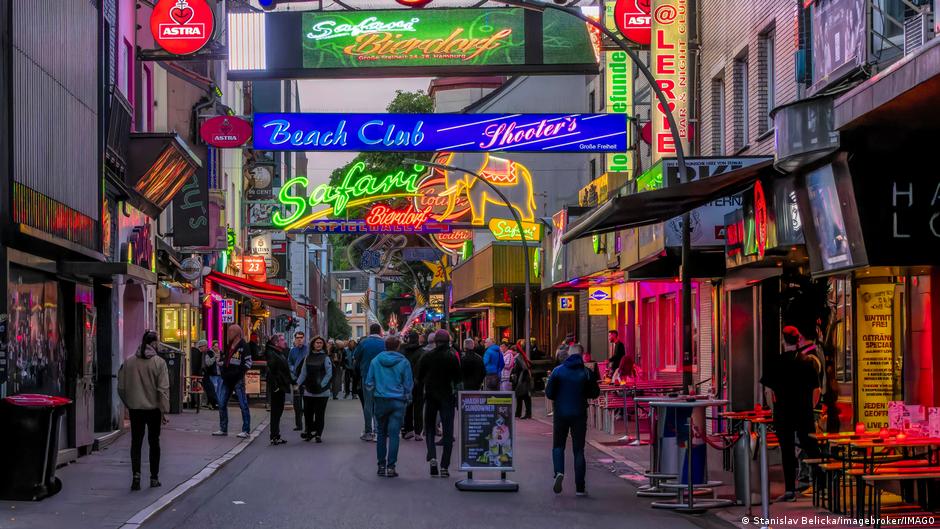

Germany’s debate over sex work has flared up after Bundestag President Julia Klöckner (CDU) declared the country had become the ‘brothel of Europe’ and urged a ban on prostitution and the purchase of sexual services. Speaking at an awards ceremony, Klöckner said current legislation fails to protect vulnerable people in the trade. Health Minister Nina Warken, also of the CDU, echoed her call and proposed criminalizing clients while exempting sex workers from punishment and providing robust support to help them exit the industry.
Sex work in Germany was removed from the realm of ‘‘immorality’’ under the 2002 Prostitution Act, which recognized it as a legal service and affirmed the right of sex workers to be paid. The 2017 Prostitution Protection Act later introduced registration for sex workers and licensing requirements for brothels, tying approvals to minimum safety, hygiene and equipment standards.
Official figures at the end of 2024 show roughly 32,300 registered sex workers in Germany. Only about 5,600 of those were German nationals; around 11,500 were Romanian and roughly 3,400 Bulgarian. Estimates of unregistered sex workers vary widely: some researchers put the low end at 200,000–400,000, while other estimates rise to as many as 1 million. Many unregistered workers are foreign women with limited German, poor access to information about their rights and restricted health and support services. A substantial share are believed to be in forced prostitution, driven by poverty or coercion by pimps.
Critics of legalization argue that the 2002 law expanded the market, lowered prices and intensified competition, creating conditions that facilitate exploitation. Reports from the Federal Criminal Police Office have noted increases in human trafficking, forced prostitution and abusive client behavior.
Klöckner and Warken favor adopting the so-called Nordic model, which criminalizes the purchase of sexual services and organized procurement (such as pimping and third-party profiteering) while not penalizing those who sell sex. First enacted in Sweden in 1999 and later adopted by Norway, the approach is now used in countries including Iceland, Canada, France, Ireland and Israel. The model typically combines criminal sanctions for buyers — ranging from fines to, in Sweden, prison terms of up to one year — with social services, exit programs and exemptions from prosecution for sellers. Norway even prosecutes citizens who buy sex while abroad.
The proposal has split advocates. Those who consider sex work legitimate labor argue that criminalizing clients will drive the industry further underground, shifting activity to harder-to-regulate online platforms and making sellers less safe. Supporters of the Nordic model counter that much sex work is already covert and that refusing to punish people coerced into selling sex is vital. They say penalizing buyers can reduce demand and the overall scale of the market, thereby making it easier to detect and disrupt trafficking and abuse.
Academic research offers mixed but sometimes supportive findings for the Nordic approach. A University of Tübingen study cited by proponents concluded that the model ‘‘contributes to an objectively measurable reduction in the number of victims of human trafficking in the long term.’’
Advocates for adopting the Nordic model emphasize that criminal law alone will not solve the problem. The Federal Association for the Nordic Model and other groups call for substantial, sustained funding for exit services — including housing, mental-health care, education, job training and prevention programs — alongside consistent prosecution of pimping and trafficking to meaningfully reduce forced prostitution.
The debate in Germany will hinge on whether lawmakers conclude that criminalizing buyers and beefing up social supports will better protect vulnerable people than the existing regulatory framework, or whether stronger rights and protections for sex workers within a legalized model remain the preferable route.
Originally published in German.