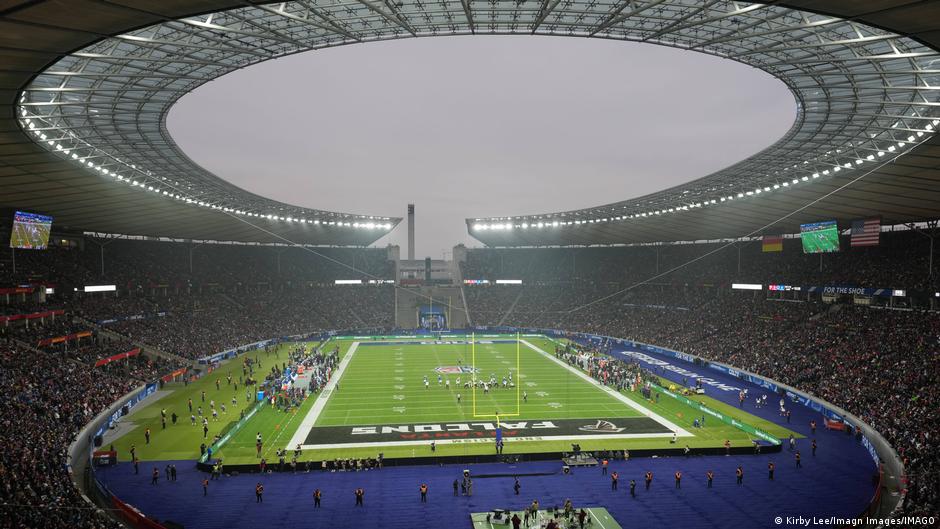

On the day Berlin observed the 36th anniversary of the Wall’s fall, American football took center stage. The Indianapolis Colts edged the Atlanta Falcons 31-25 in overtime at a refurbished Olympiastadion, with 72,203 spectators enjoying a carnival of fan rituals — singalongs, novelty promotions, an 83-yard Jonathan Taylor touchdown and endzone celebrations — that mixed entertainment with local color.
Players welcomed the setting, calling the Olympic venue historic and special to play in. For many, the stadium’s past added to the occasion: Jesse Owens’ Olympic triumphs, Usain Bolt’s world record and the 2006 World Cup final are part of its lineage, and athletes said that history lent the event a sense of gravitas.
Making the game possible required significant temporary and permanent changes. Two locker-room areas were combined to accommodate larger NFL rosters; additional washroom facilities were installed; several doors were widened and hot-water capacity upgraded. On the pitch, a plastic base layer and a hybrid turf mat were added, and pole-vault runways were removed to clear playing space.
City and league funding has followed. The Berlin Senate has earmarked €5 million between 2025 and 2029 for Olympic Stadium upgrades and other public sports projects, as part of a broader €12.5 million allocation linked to NFL events. Reports indicate the NFL itself is investing nearly €50 million. Stadium officials say the work means the Olympiastadion can host NFL games without further temporary alterations for the next four years. Event managers described the renovations as ‘legacy measures’ intended to make the site multifunctional for soccer, athletics and American football while reducing the need for repeating short-term fixes.
Still, questions remain about long-term suitability. Many German venues were modernized for the 2006 World Cup and refurbished for Euro 2024, but overall investment in flexible stadium infrastructure lags behind other European hubs. Newer stadiums built with NFL-style flexibility — for example, retractable-pitch systems that switch between natural grass and surfaces tailored for American football — give hosts an advantage. Tottenham Hotspur’s ground and Real Madrid’s renovated Bernabéu are examples of stadiums with complex, costly systems; the Bernabéu’s setup will also feature in Spain’s first NFL game.
Those advanced solutions come with heavy financial burdens. Clubs have taken on large debts and long repayment schedules to fund multi-use arenas, a model that is not always feasible in markets with different financing rules or where stadiums are protected as cultural monuments. Germany’s stadium financing and heritage considerations complicate decisions about whether to pursue expensive, permanent conversions.
With the NFL working to establish a regular European presence, and other U.S. leagues exploring European expansion, the push for adaptable, long-term infrastructure will intensify. For now, the Olympiastadion’s upgraded historic setting delivered a memorable event, but the broader debate continues: will atmosphere and history be enough, or will leagues and teams demand deeper, costlier stadium transformations to meet the logistical demands of regular American-sport visits?
Edited by: Saim Dušan Inayatullah