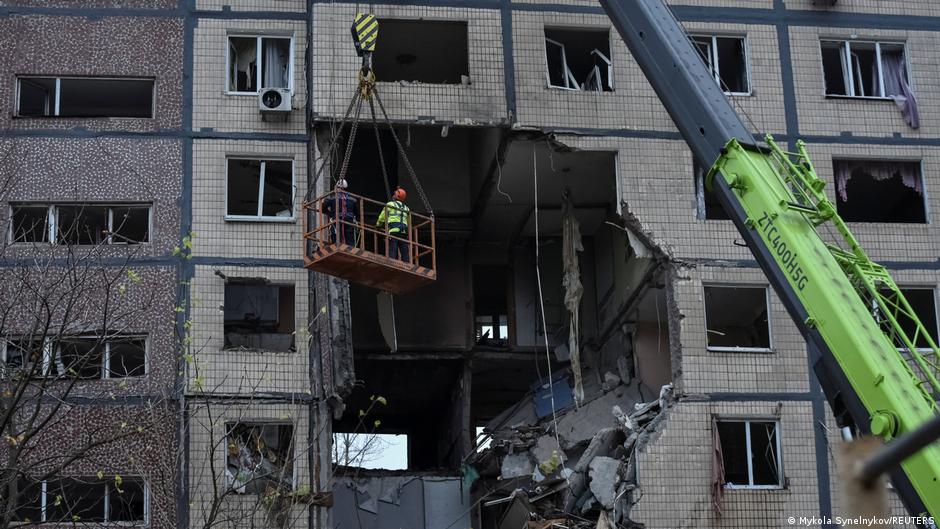

Russian forces carried out a large overnight assault on Ukrainian cities, officials said, using missiles and hundreds of attack drones. The strikes killed at least four people, injured dozens and damaged key energy facilities, leaving communities with power outages and heightened security concerns.
Attacks and casualties
– Ukrainian authorities reported strikes across multiple regions, including Dnipro, Kirovohrad, Mykolaiv, Sumy, Chernihiv, Kharkiv, Poltava and Odesa. In Dnipro an apartment building was hit, killing at least three people and wounding at least 11; a separate fatality was reported in Kharkiv region, bringing the confirmed death toll to at least four.
– President Volodymyr Zelenskyy said Russia launched about 450 drones and some 45 missiles overnight, with energy facilities and infrastructure among the main targets. Prime Minister Yulia Svyrydenko said major energy sites in Kyiv, Kharkiv and Poltava regions were damaged.
– Prosecutors have charged a battalion commander with negligence after investigators said about 100 soldiers gathered at a prohibited celebration, leaving them exposed to a deadly strike on November 1 that killed 12 soldiers and seven civilians and wounded many others.
Front-line fighting: Pokrovsk and other towns
– Heavy house-to-house fighting was reported in the Donetsk town of Pokrovsk. Kyiv described the situation as difficult and said intense combat is ongoing; Ukrainian intelligence estimated roughly 314 Russian fighters had infiltrated the city, an increase from earlier figures.
– Russia’s Defence Ministry claimed advances around Pokrovsk, nearby Myrnohrad and in Kupiansk in Kharkiv region, saying its forces had surrounded some towns. Open-source mapping and battlefield footage show Russian forces pushing around Pokrovsk and Kupiansk, though analysts say that does not necessarily mean Ukrainian units are fully encircled.
– Russian authorities also announced the capture of the small village of Vovche in Dnipropetrovsk region.
Nuclear safety and deterrence
– The International Atomic Energy Agency (IAEA) confirmed that a second external power line — a 330-kilovolt connection — to the Russian-occupied Zaporizhzhia nuclear plant was repaired and reconnected for the first time in six months, improving electrical stability at the site. IAEA chief Rafael Grossi called the repair “a good day for nuclear safety.” The plant’s reactors remain shut down but depend on external power and backup diesel generators to maintain cooling.
– Russian Foreign Minister Sergei Lavrov said Moscow was preparing proposals to follow President Vladimir Putin’s instruction to consider a possible Russian nuclear test, a response Lavrov said was prompted by U.S. President Donald Trump’s announcement that the United States would resume nuclear testing. Russia has not carried out a nuclear test since 1990.
– Dutch Prime Minister Mark Rutte said he intends to more publicly highlight NATO’s nuclear capabilities to deter Russia and reassure allied populations about the alliance’s deterrent. (Officials differ on language and roles used to describe these measures.)
Cross-border incidents and strikes inside Russia
– Russian regional authorities reported damage from Ukrainian drone activity. Saratov officials said two people were injured when a drone struck a residential building; authorities in Vologda reported three drones hit an electricity substation. Russia’s Defence Ministry said it shot down dozens of drones overnight, mainly over regions bordering Ukraine.
Incidents involving journalists and accountability
– A van carrying two foreign journalists, from Austria and Spain, was struck by a drone near the front line in Donetsk while traveling with an aid organisation to Kostiantynivka; the journalists escaped without serious injury, and video from the scene showed damage and smoke.
– Ukrainian investigators have pressed charges in relation to the fatal gathering that left troops exposed, as authorities pursue accountability for the November losses.
Political and hybrid warfare developments
– Hungary’s foreign minister said Budapest secured an “indefinite” exemption from some U.S. sanctions related to Russian oil and gas purchases after Prime Minister Viktor Orbán’s meeting with U.S. officials. A White House official described the waiver as lasting one year and said Hungary committed to buying U.S. liquefied natural gas contracts worth roughly $600 million.
– A new study highlighted that Russia continues to operate a network for hybrid operations across Europe, using covert agents and sabotage, influence campaigns and other clandestine methods. The report argues these activities are central to Moscow’s strategic approach rather than peripheral.
Situation overview
Kyiv has renewed calls for tougher sanctions on Russia’s energy sector and for increased allied military support to blunt intensified strikes. The combination of sustained drone-and-missile attacks on power and infrastructure, fierce fighting around key eastern towns, concerns about nuclear-site safety and escalatory rhetoric continues to shape a volatile situation across front lines and civilian areas.