After the Bhote Koshi Disaster, Asia's Glacial Flood Risk Is Under Scrutiny
A glacier collapse on the Nepal-China border killed more than 1,200 people. Hundreds of similar lakes across the Himalaya have no early-warning system at all.
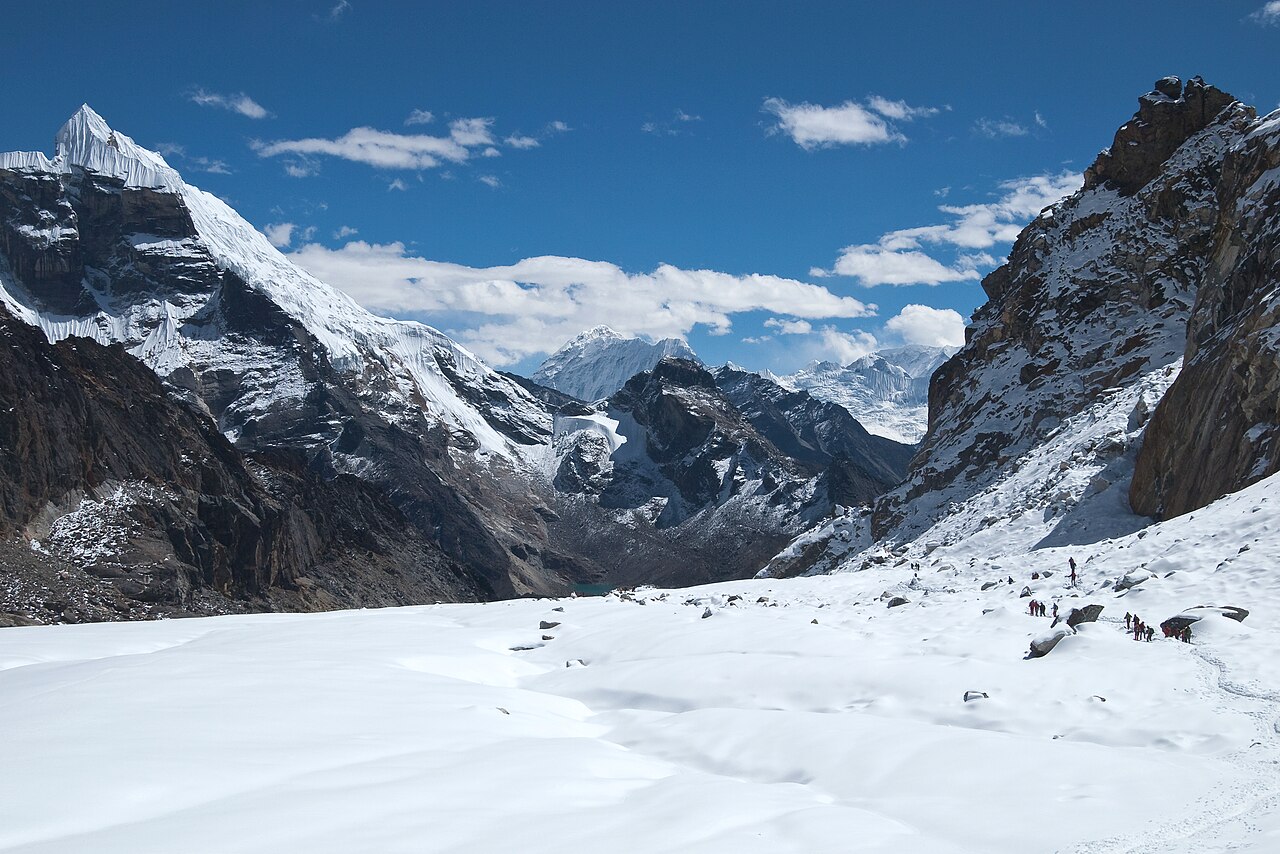
The glacier collapse that sent a wall of water down the Bhote Koshi valley on the Nepal-China border has killed more than 1,280 people, with close to 3,000 still missing. It has also forced a question the region has deferred for years: how many more of these are waiting?
The mechanism
As Himalayan glaciers retreat, they leave meltwater pooled behind natural dams of loose rock and debris. These dams were never engineered and are not stable. When one fails — through overtopping, an ice avalanche into the lake, or simple erosion — the entire lake discharges at once into the valley below.
The technical name is a glacial lake outburst flood. The practical description is that communities downstream receive minutes of warning, not hours.
The scale of the exposure
Hundreds of such lakes have formed across the Himalayan range, and the number has grown as ice loss has accelerated. The distribution of risk is uneven but the pattern is consistent:
- Settlement is concentrated on valley floors, which is exactly where the water goes.
- Hydropower infrastructure is built on the same rivers, and is both vulnerable and expensive to replace.
- The lakes sit in high, remote terrain, often across contested or difficult borders, making monitoring a diplomatic problem as well as a technical one.
Warning signs that were seen
A subsequent report found that warning signs had been visible before the collapse. That finding is the most consequential detail in the whole event, because it moves the disaster from the category of the unforeseeable into the category of the unacted-upon.
Satellite monitoring of glacial lakes exists and has improved substantially. The gap is not primarily in detection. It is in the chain that runs from an observation to an alarm to an evacuation — the sirens, the communication networks, the drills, and the institutional responsibility for pulling the trigger.
What Nepal is doing now
Kathmandu has released around 1 billion Nepali rupees — roughly $6.5 million — toward rebuilding, and has begun shifting from rescue to rehabilitation. Emergency teams have treated at least 4,070 people.
Rebuilding shelter before winter is the immediate task. Extending early-warning coverage to the valleys that still have none is the one that would change the next event's death toll.