An Enzyme Reads an Eight-Letter Genetic Alphabet
UC San Diego researchers showed a key cellular enzyme can accurately transcribe a genetic code with twice the letters used by all known life.
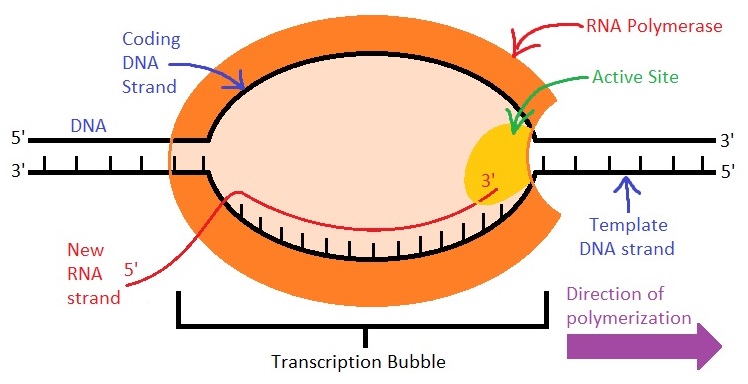
Researchers at UC San Diego have demonstrated that a key cellular enzyme can accurately read an eight-letter genetic alphabet — double the four letters used by every known living thing on Earth.
What the four letters do
All terrestrial life encodes genetic information using four nucleotide bases, conventionally written A, T, G and C. They pair in fixed combinations, and that pairing is what allows DNA to be copied and read.
Synthetic biologists have built additional base pairs before. Making them work inside the cellular machinery has been the persistent obstacle — a synthetic base is of limited use if the enzymes that transcribe DNA cannot process it.
Why an enzyme reading it is the breakthrough
The enzymes involved evolved over billions of years against exactly four bases. They are highly specific by necessity: an enzyme that tolerated arbitrary substitutions would produce constant errors.
Showing that a key enzyme can transcribe an eight-letter code accurately means the expanded alphabet is not merely chemically stable but functionally readable. That is the difference between a curiosity and a usable system.
What it could enable
- Information density — eight letters encode substantially more per position than four, with implications for DNA-based data storage.
- Novel proteins built from amino acids outside the standard set, with properties nothing in nature produces.
- Biological containment — organisms dependent on synthetic bases cannot survive outside a laboratory that supplies them, a genuine safety mechanism.
The distance to applications
Considerable. A demonstration that one enzyme reads an expanded alphabet accurately is a long way from an organism that uses one routinely. Cellular systems involve many enzymes, and each is specific in its own way.
The finding matters because it removes a specific obstacle that had blocked the field, not because it completes the work.
The larger point
Life on Earth uses four bases. Nothing established requires that it must — the four may reflect historical accident rather than chemical necessity. Work like this tests that question directly, by building the alternative and seeing whether the machinery cooperates.
So far, it does.