An Injectable Scaffold Restored Movement in Stroke-Damaged Mice
Duke researchers developed a material that helped damaged brains grow new blood vessels, support nerve regrowth and recover motor function.
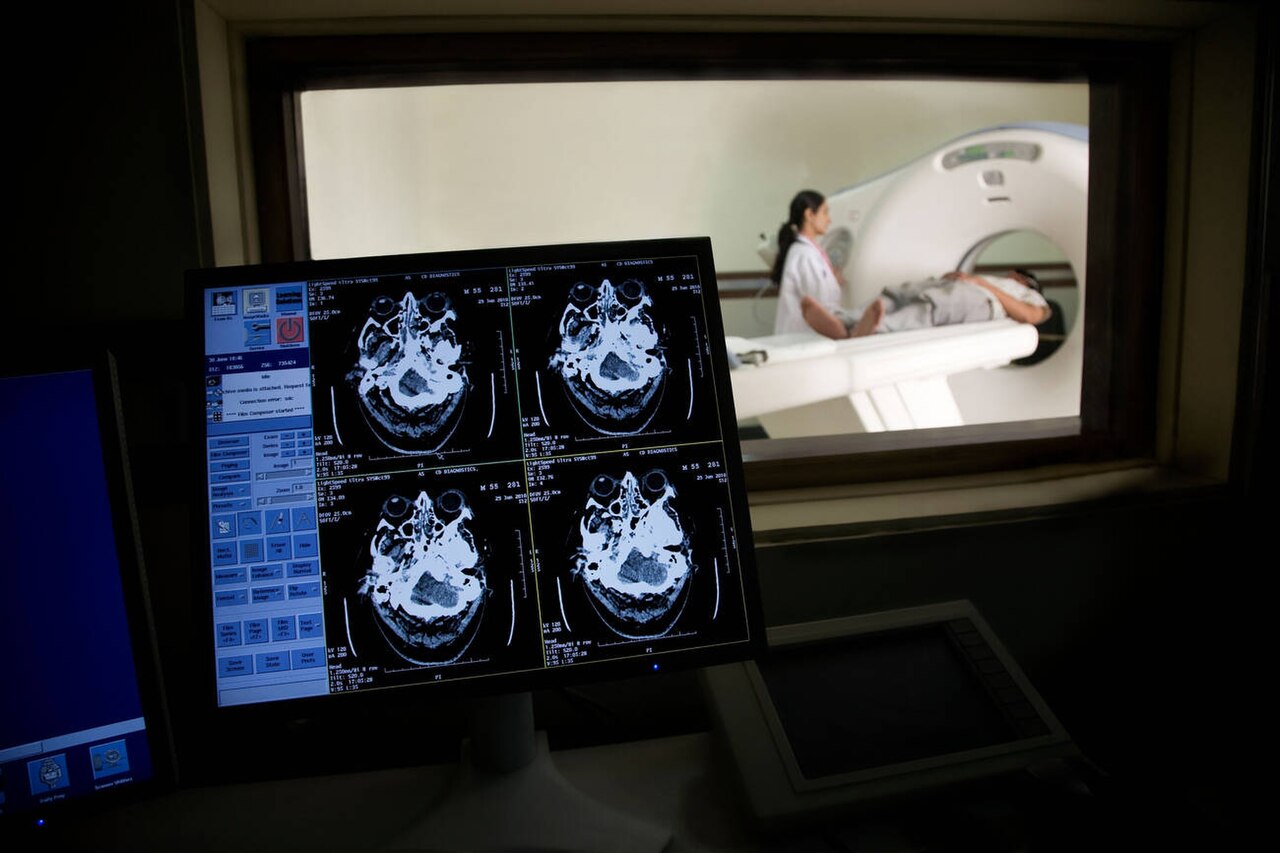
Researchers at Duke have developed an injectable scaffold that helped stroke-damaged brains grow new blood vessels, supported nerve regrowth, and restored movement in mice.
Why stroke damage is so hard to reverse
A stroke kills brain tissue by interrupting blood supply. What remains is a cavity — a region where the structure that once supported neurons has been destroyed.
Neurons cannot simply regrow into empty space. They need physical scaffolding to extend along, and they need a blood supply to survive once there. Absent both, the cavity persists and the lost function does not return.
This is why stroke rehabilitation has focused on training surviving tissue to take over lost functions, rather than on repairing the damage. Recovery of that kind is real but limited.
What the scaffold does
The material addresses both missing elements at once:
- Physical structure for cells to grow along, filling the void left by dead tissue.
- Vascularisation — promoting new blood vessel growth, without which any regrown tissue dies.
- Nerve regrowth support, enabling neural connections to re-form.
That it is injectable matters enormously. A scaffold requiring open surgery to place in damaged brain tissue would be difficult to justify in most patients. An injectable material can conform to an irregular cavity and be delivered far less invasively.
Recovery of movement
The functional result is the significant one. Growing tissue is a necessary step, not a sufficient one — new tissue that does not integrate into working circuits restores nothing.
Recovery of movement indicates the regrown tissue participated in functional neural circuits, which is what any therapy of this kind ultimately has to achieve.
The caveat that always applies
This was demonstrated in mice. The distance between a rodent result and a human therapy is long and littered with failures, particularly in neurology, where a great many promising animal results have not translated.
Human brains are larger, stroke cavities are bigger, patients are older and carry other conditions, and the timing of intervention differs substantially.
Why it still matters
Stroke is among the leading causes of long-term disability worldwide, and current treatment is overwhelmingly about limiting damage during the acute phase rather than repairing it afterwards. A therapy addressing the chronic cavity would be a different category of intervention.