China's Bet Is on AI Diffusion, Not Frontier Models
The 'AI Plus' initiative pushes adoption across existing industries, with official projections putting AI-related sectors above 10 trillion yuan by 2030.
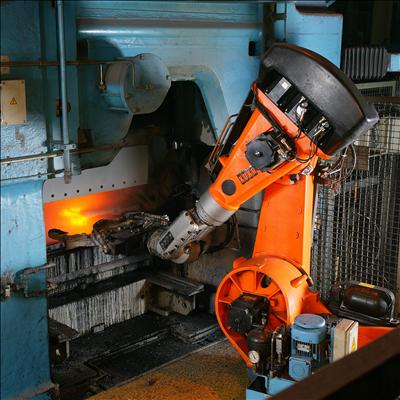
China's 2026 policy framework places artificial intelligence at the centre of its growth strategy — but not in the way the term usually implies. The "AI Plus" initiative is about pushing AI adoption across existing industries rather than competing to build the most capable models.
Official projections put AI-related industries above 10 trillion yuan by the end of the 15th Five-Year Plan period, which runs 2026 to 2030. The overall growth target is 4.5 to 5 percent.
Why diffusion rather than frontier
The strategic logic is sound regardless of what one thinks of the policy:
- Frontier model development requires the most advanced chips, which is precisely where export controls bite hardest.
- Diffusion plays to an existing advantage — an industrial base large enough that modest productivity gains aggregate to very large numbers.
- Applied AI can run on less advanced silicon than frontier training requires.
Competing where you are constrained is a poor strategy. Competing where your existing assets are decisive is a better one.
The evidence on where value actually accrues
The wider industry has been moving in a similar direction. The prevailing assessment is that AI now matters most in workflows, data rights and human review rather than in demonstrations of capability — Microsoft's enterprise push and Google's agent and robotics releases all point toward AI as part of ordinary work rather than as a separate category.
If that is right, the returns concentrate in deployment rather than in model development. Which is what China's strategy assumes.
The limits
Diffusion has real constraints. It depends on the models being diffused, and if the best models remain accessible only through providers subject to export restrictions, the ceiling on applied performance is set elsewhere.
Domestic model development therefore remains necessary as a floor, even if it is not where the strategy places its emphasis.
The scale of the industry it operates in
More than 373 model releases have been tracked across major organisations, at a pace that turns cutting-edge capabilities into baseline expectations within months.
In an environment where model capability commoditises that quickly, betting on deployment rather than on development is not obviously the wrong call.