DR Congo Confirms New Ebola Case in Rebel-Held North Kivu
The case was confirmed on 3 September, more than two months after authorities in the area had declared the outbreak over — and in territory outside government control.
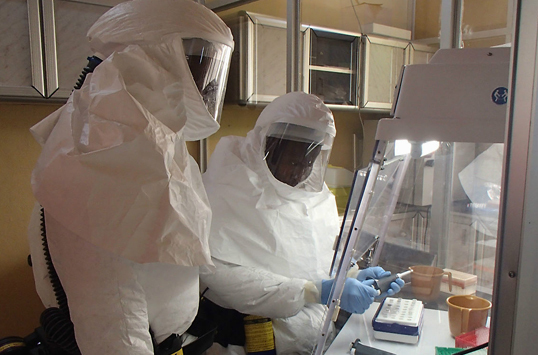
The Democratic Republic of Congo has confirmed a new Ebola case in North Kivu, more than two months after authorities in the area declared the province's outbreak over.
The case was confirmed on 3 September. Its location makes it considerably harder to handle than the epidemiology alone would suggest: the affected area is held by rebel forces, outside the reach of the national health ministry's normal operations.
Why a single case matters
Ebola outbreaks end when a defined period passes with no new transmission. A case appearing after that declaration means one of two things, and neither is good: either a chain of transmission continued undetected, or the virus has re-emerged from a survivor or an animal reservoir.
Both scenarios demand the same response — rapid contact tracing, isolation, and ring vaccination of everyone around the case. All three depend on health teams being able to reach people and on those people being willing to be reached.
The complication is not medical
Eastern DRC has been the hardest environment in the world to run an outbreak response for the better part of a decade. The obstacles are consistent:
- Access — response teams need permission, safe passage, or both from armed groups.
- Security — health workers and treatment centres have been attacked in past outbreaks in the region.
- Trust — communities that have experienced years of conflict are often, reasonably, sceptical of outside teams arriving with instructions.
- Population movement — displacement moves potential contacts across districts and borders faster than tracing can follow.
What the region has going for it
The response toolkit is far better than it was during the 2014 West Africa epidemic. Licensed vaccines exist, therapeutics have improved survival substantially, and DRC's own health services have more direct Ebola experience than any others on the continent. Ring vaccination — immunising the contacts of a case, and their contacts — has repeatedly stopped chains before they became epidemics.
None of that helps if teams cannot get to the village.
What to watch
The critical window is the next three weeks. If contact tracing establishes where this case came from and no further cases follow, this will be recorded as a tail-end event. If additional cases appear in territory the response cannot enter, the region is facing a second outbreak rather than the end of the first.