Germany's Firewall Is Holding, and the Cost Is Rising
The AfD led Sunday's Saxony-Anhalt election. Excluding it requires coalitions that grow broader, less coherent and less able to govern well.
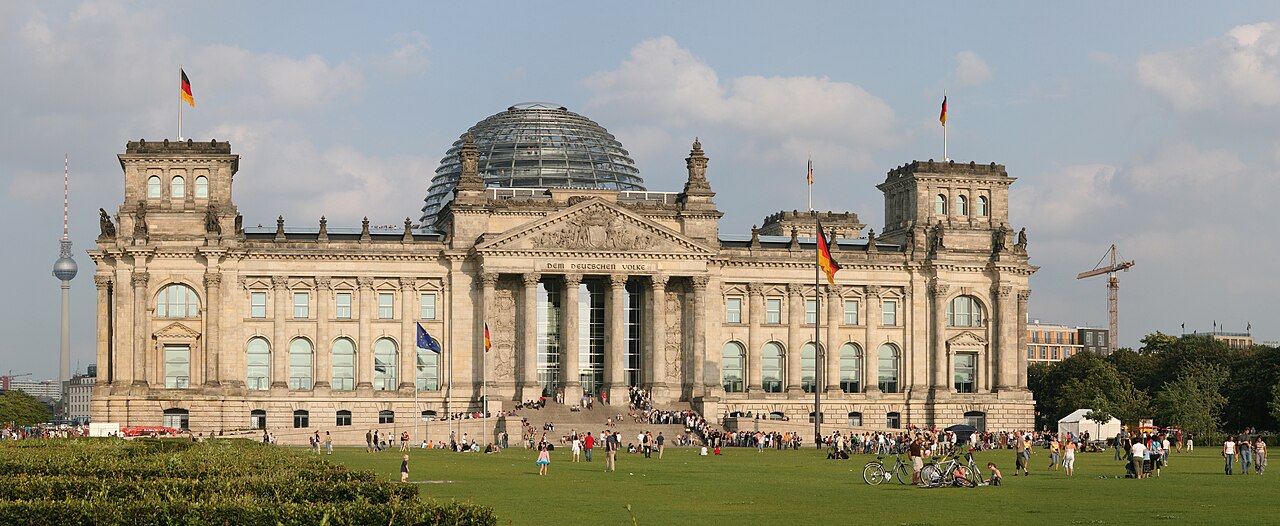
Exit polls gave the Alternative for Germany a strong lead in Sunday's Saxony-Anhalt state election, raising the prospect of Germany's first far-right state government since the Second World War.
It probably will not happen. The reason it probably will not happen is the more interesting question.
The mechanism
German state parliaments are elected proportionally, and governments are assembled through coalition. Every other party represented has maintained a refusal to enter coalition with the AfD — the arrangement known as the Brandmauer, the firewall.
Where it holds, the largest party sits in opposition and the remaining parties form a government between them.
The arithmetic problem
The firewall was designed for a party polling in the low teens. Applied to one that finishes first, it produces coalitions with a specific and worsening set of properties:
- They must be broader, drawing in parties with less in common.
- They are less coherent, held together by exclusion rather than by agreement.
- They govern less effectively, because internal disagreement blocks decisions.
A government that struggles to govern strengthens the opposition it was assembled to exclude. That is the trap: the firewall works, and working makes the problem larger.
The argument inside the mainstream
Its defenders hold that democratic parties have an obligation not to normalise the AfD, and that the firewall has succeeded in keeping it from power for a decade.
Its critics — including voices within the governing parties — argue that permanently excluding the largest bloc feeds precisely the grievance the party campaigns on, and that voters notice when their choice is set aside.
Neither side has produced an answer to the trajectory. The share keeps rising; the coalitions keep getting broader.
Why the east
The AfD's strength is concentrated in Germany's eastern states, for structural reasons: persistent post-reunification economic divergence, sustained outward migration of younger people, weak party attachment, and migration as a mobilising issue in regions that receive comparatively few migrants.
Not only Germany
The pattern is European. Polling suggests Marine Le Pen is on course for the French presidency, and Jordan Bardella met Nigel Farage in Birmingham this week to discuss cooperation on migration. Five EU states have agreed a shared model for migrant return hubs by 2027.
Mainstream parties are increasingly adopting the policy while refusing the coalition. Whether that defuses the pressure or validates it remains unresolved.