Mars Had Magmatic Systems Thought to Require Plate Tectonics
Evidence from deep beneath the Martian surface points to enormous magmatic structures that terrestrial geology associates with a process Mars never had.
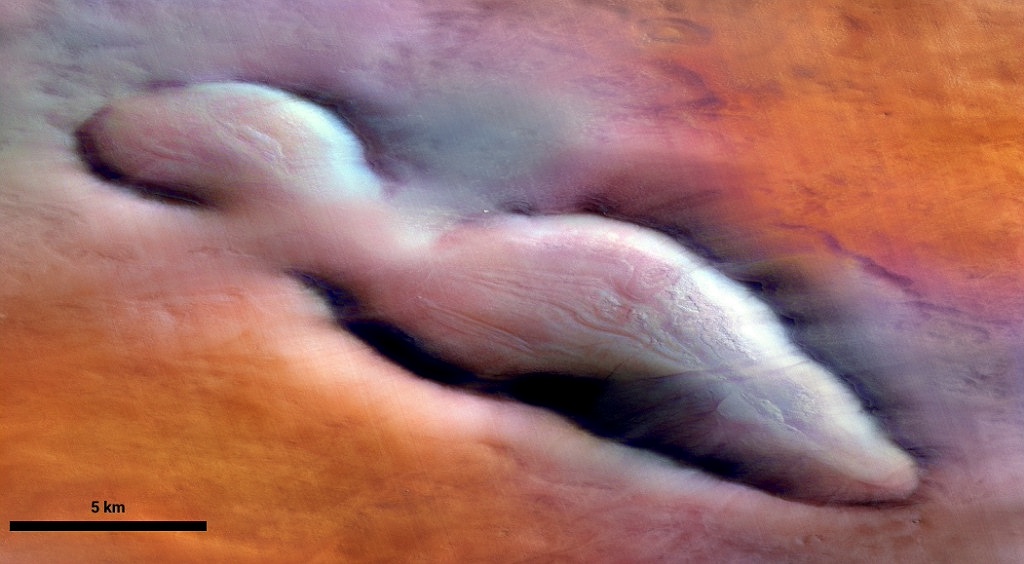
Scientists have found evidence deep beneath the Martian surface of enormous magmatic systems — structures that terrestrial geology had associated with Earth-like plate tectonics.
Mars is not thought to have had plate tectonics.
Why that combination is a problem
On Earth, plate tectonics drives much of the planet's geological activity. Plates move, collide and subduct, and that motion generates the conditions producing large-scale magmatic systems.
Mars has a single unbroken lithosphere. Without moving plates, the mechanism that generates such systems on Earth is simply unavailable — which makes finding the structures without the process a genuine puzzle rather than a detail.
The available explanations
- These systems can form through other mechanisms, and terrestrial geology has over-attributed them to plate tectonics because Earth is the only planet studied in detail.
- Mars had some form of crustal mobility early in its history that has not been recognised.
- The structures formed through processes with no terrestrial analogue, driven by Mars's different size, composition and cooling history.
Each carries consequences beyond Mars. The first would mean revising assumptions used to interpret geology across the solar system.
The single-example problem
Planetary science has spent most of its history reasoning from one thoroughly studied planet. That produces theories that are well tested on Earth and untested as general propositions.
Mars is the second planet examined in comparable detail, and it keeps returning results that do not fit. Each is uncomfortable for existing models and useful for exactly that reason — a theory only reveals its assumptions when something violates them.
Why subsurface data matters
Surface features on Mars have been mapped extensively. The interior has not, and it is where the record of the planet's early history is preserved rather than eroded away.
Reaching that record has required seismic and gravitational measurement rather than imaging — a slower and more indirect approach, and the reason findings of this kind arrive decades after the first surface surveys.
What is coming
NASA's newly launched Roman Space Telescope, a $4.3 billion mission, will address dark matter, dark energy and exoplanets rather than Martian geology. But it belongs to the same broadening of the observational base — the process by which single-example reasoning gradually becomes comparative science.