Roman Telescope Begins a Million-Mile Journey on a Spy Satellite's Mirror
NASA's $4.3 billion observatory launched with a donated Hubble-class mirror originally built for reconnaissance, and faces a three-month cruise to its final orbit.
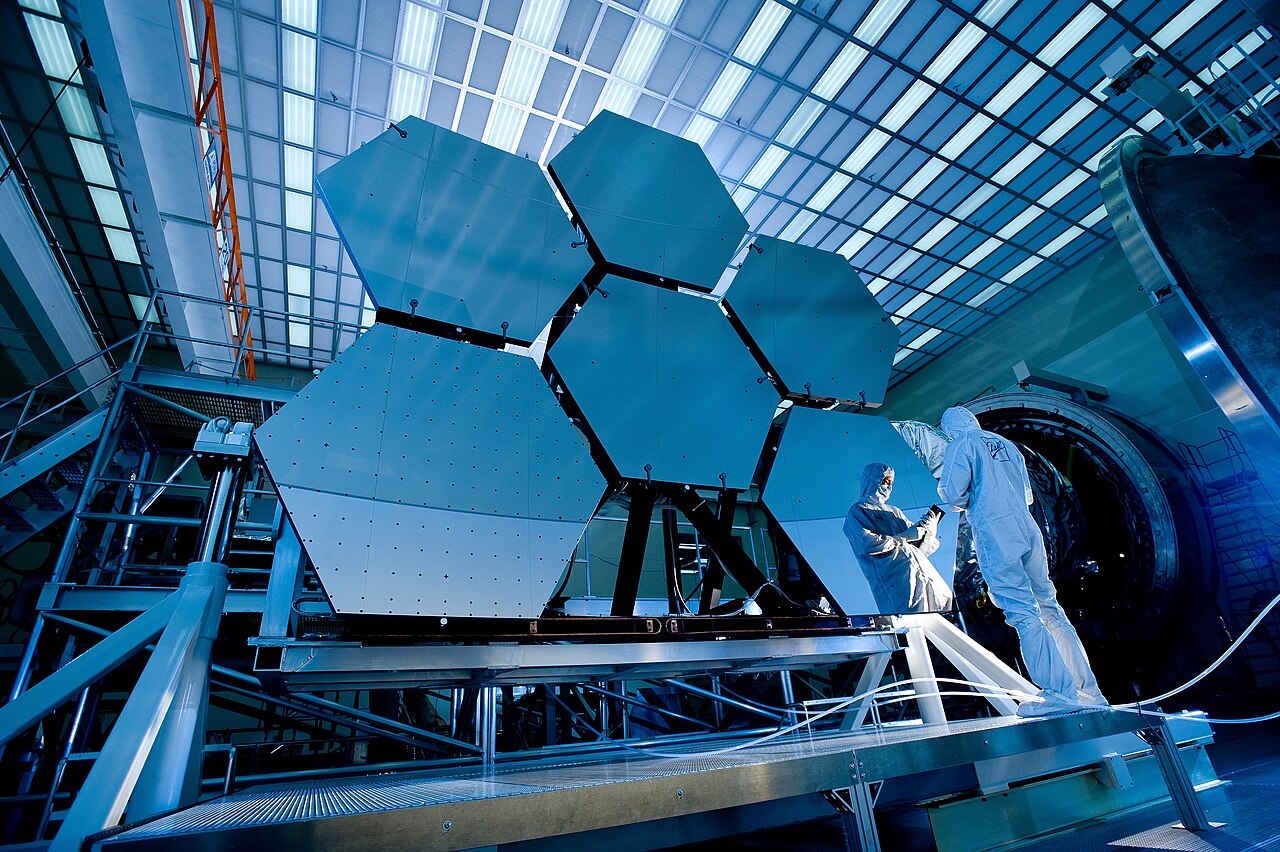
NASA's Nancy Grace Roman Space Telescope has launched on a $4.3 billion mission, beginning a three-month journey of roughly a million miles to its operational orbit.
Its primary mirror was not built for astronomy. It is a Hubble-class mirror originally constructed for a reconnaissance satellite, donated to NASA.
The mirror's history
The donation, made years ago, was an unusual moment of overlap between two enormous and normally separate government optical programmes. An intelligence agency had built mirrors of a quality NASA could not readily afford, for satellites that were never flown, and handed the surplus to the civil space programme.
The optics are broadly comparable to Hubble's. What differs is the design around them: Roman's instrument gives it a far wider field of view, which changes what kind of astronomy it can do.
Why field of view is the point
Hubble produces exceptionally detailed images of small patches of sky. That is ideal for studying individual objects and useless for surveying large areas — covering the whole sky at Hubble's field of view would take longer than any mission lifetime.
Roman trades nothing in resolution while seeing a much larger area at once, which makes survey astronomy tractable. Surveys are what you need for questions about the universe as a whole rather than about particular objects.
What it will work on
- Dark energy — mapping cosmic expansion across enormous volumes.
- Dark matter — through gravitational lensing measured across wide fields.
- Exoplanets — including detections via microlensing, which requires monitoring very large numbers of stars simultaneously.
All three are statistical problems. They need many objects rather than detailed views of a few, which is exactly what Roman's design provides.
The three months ahead
The cruise to its operational orbit is not idle time. Instruments must cool, optics must be aligned, and every system must be checked before science operations begin.
Space telescopes are unrepairable at these distances. Hubble was serviced by astronauts in low Earth orbit; nothing a million miles out can be reached. Commissioning is the last opportunity to find a problem while anything can still be done about it.