SpaceX Flies Its 80th Starlink Mission of the Year
A single constellation has absorbed 80 launches in roughly eight months, a cadence that has quietly changed what is possible in orbit.
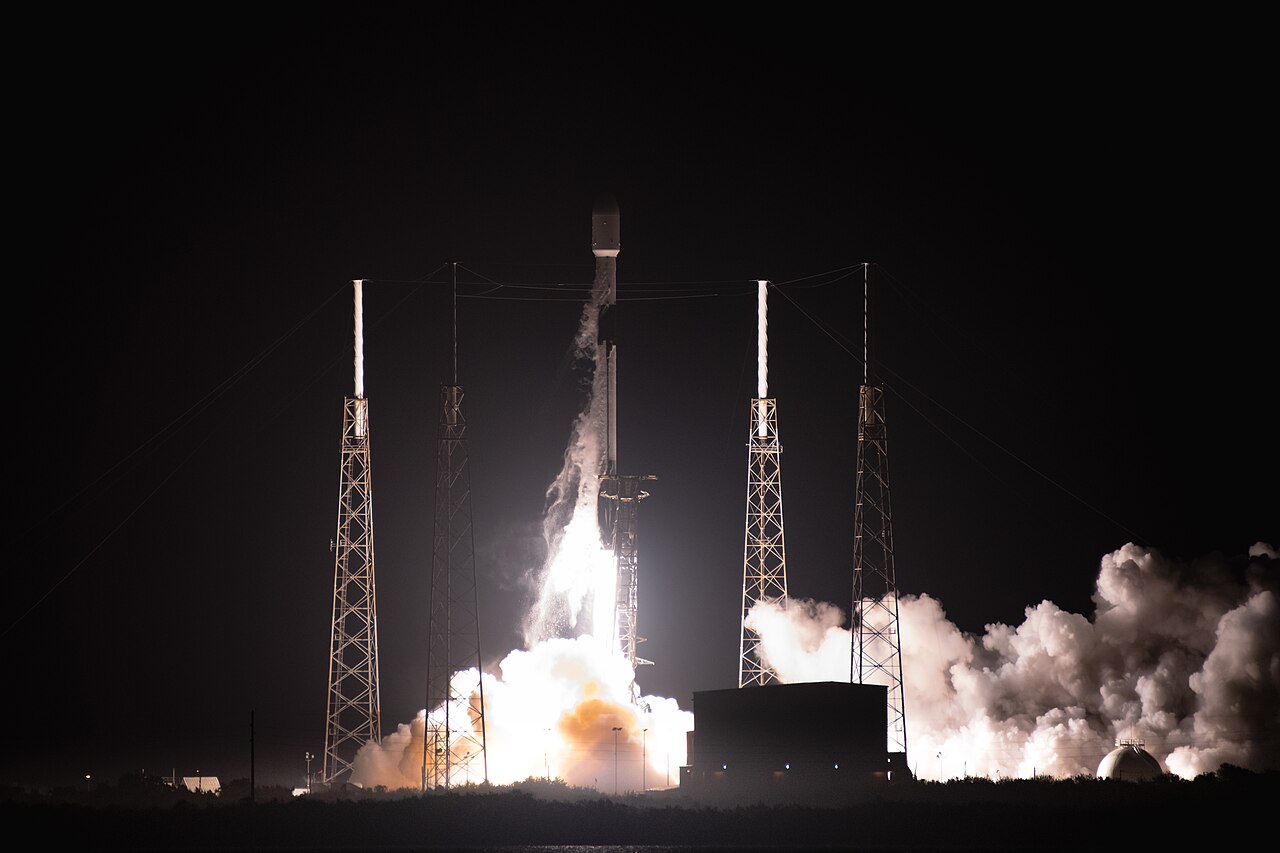
SpaceX flew its 80th Starlink mission of 2026 on 5 September, days after a Falcon 9 lifted off from Vandenberg Space Force Base on 1 September with another batch of satellites.
The cadence in perspective
Eighty launches of one constellation in roughly eight months works out to a mission approximately every three days — for a single customer, on a single vehicle type.
For most of the space age, an entire national programme launching eighty times in a year would have been extraordinary. That it now happens for one satellite network is the clearest measure of how the economics have changed.
What made it possible
- Reusability — recovering and reflying boosters removes the largest single cost from each flight.
- Manufacturing rate — building satellites and upper stages at a pace matching the launch schedule.
- Operational tempo — pad turnaround, range scheduling and recovery operations treated as routine industrial processes.
The third is the least discussed and possibly the hardest. Reusable hardware is of no use if the launch site cannot cycle fast enough to fly it.
What it enables
Routine, inexpensive access to orbit changes what is worth attempting. Missions that could not previously justify a launch become viable, and the same infrastructure supports crewed flights — Crew-13 is scheduled to carry four astronauts to the ISS as soon as 12 September.
The costs accumulating in orbit
The consequences are not all positive, and they compound:
- Orbital congestion — many thousands of active satellites requiring collision avoidance manoeuvres.
- Astronomical interference — satellite trails crossing long-exposure observations, a persistent complaint from ground-based observatories.
- Debris risk — each object adds to a population that, above a certain density, can generate cascading collisions.
- Governance — orbital shells allocated substantially on a first-mover basis, with regulation trailing deployment.
The unresolved question
Whether the regulatory framework catches up while the problem is still tractable. Orbital debris is far cheaper to prevent than to remove, and the current arrangement has demonstrated it can deploy considerably faster than it can be governed.