The Himalaya's Glacial Lakes Are a Known Risk Without a Warning System
Satellite monitoring can see the lakes forming. What is missing is the chain that turns an observation into an evacuation.
The disaster on the Bhote Koshi has killed more than 1,280 people, with close to 3,000 missing. The finding that will define its aftermath is that warning signs were visible before the collapse.
That single detail moves the event from the category of the unforeseeable into the category of the unacted-upon — a much harder place for a disaster to sit.
The physical process
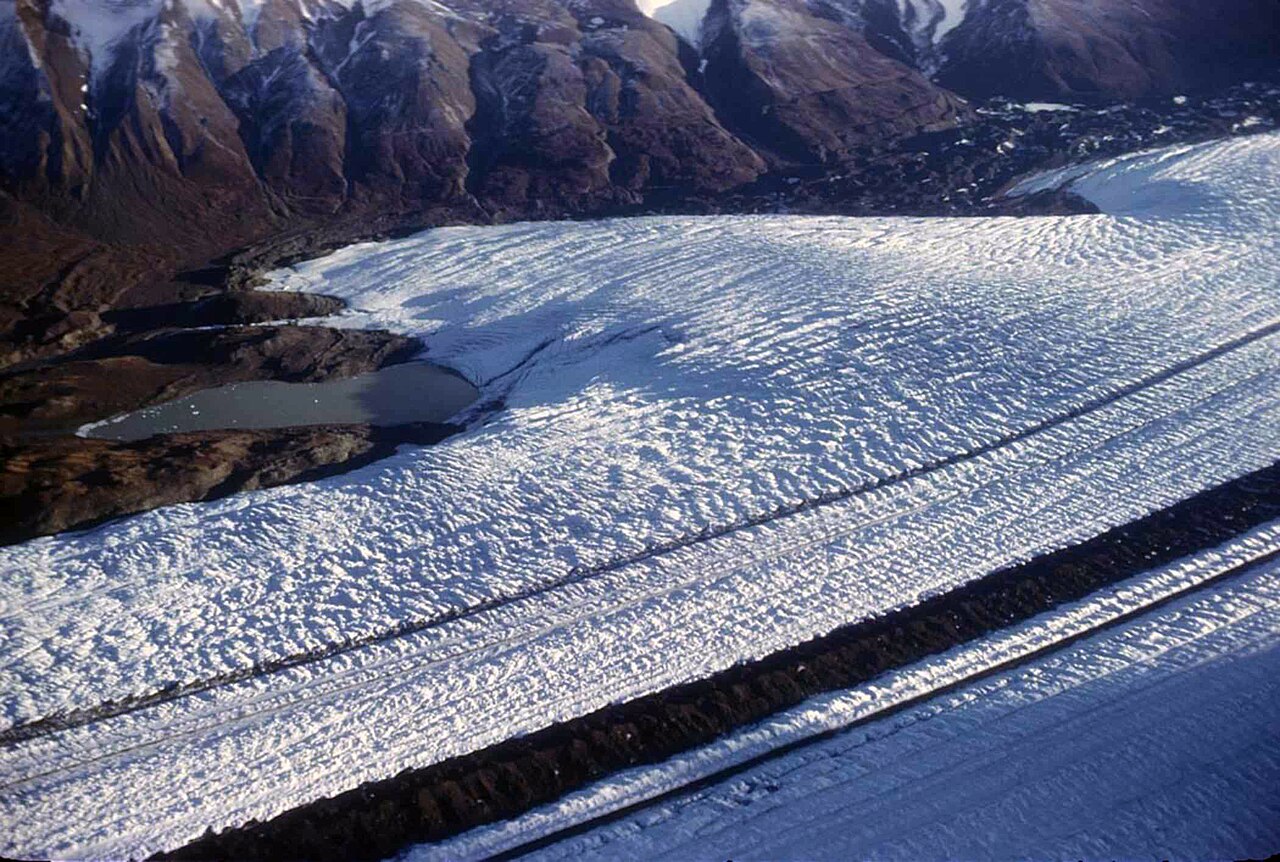
As Himalayan glaciers retreat, meltwater pools behind natural dams of loose rock and debris left by the ice. These dams were never engineered and were never stable. Failure can come from overtopping, from an ice avalanche displacing the water, or from simple erosion.
The result is a glacial lake outburst flood: the entire lake discharging into the valley below within minutes.
Why the exposure is so concentrated
- Settlement in mountain regions is concentrated on valley floors — the only flat, arable ground, and precisely where the water goes.
- Hydropower is built on the same rivers, representing enormous sunk investment in the flood path.
- Roads and bridges follow the valleys, so the flood destroys the routes rescue would use.
Detection is not the gap
Satellite monitoring of glacial lakes has improved substantially. The lakes can be seen forming, their volume estimated, and their dams assessed for stability. Hundreds have been catalogued across the range.
The gap is everything downstream of the observation:
- Instrumentation at the lake to detect a failure as it begins.
- Communication from that instrument to the valley below.
- Sirens and alerts in the settlements at risk.
- Drills, so people know where to go with minutes of notice.
- Institutional responsibility — a named body with authority to trigger an evacuation.
Each link is inexpensive relative to the losses. Together they are the difference between minutes of warning and none.
The cross-border complication
Many of these lakes sit in high, remote terrain along contested or difficult borders. Monitoring one country's hazard often requires data from another's territory, which turns an engineering problem into a diplomatic one.
What Nepal is doing
Kathmandu has released around 1 billion Nepali rupees — roughly $6.5 million — for reconstruction and has begun shifting from rescue to rehabilitation, with at least 4,070 people treated by emergency teams.
Rebuilding is the immediate need. Extending warning coverage to the valleys that still have none is what would change the next event's toll.